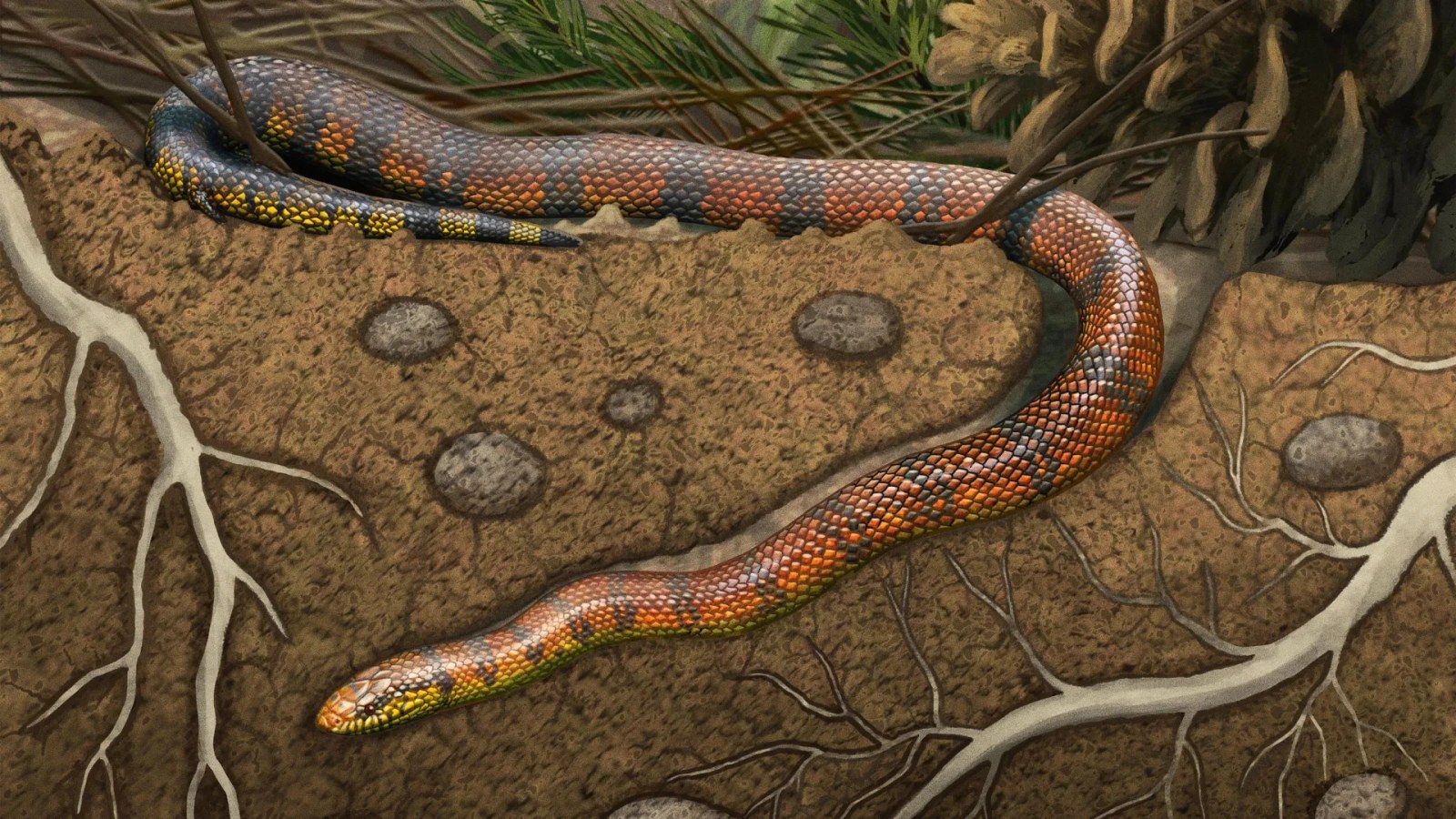
Scientists have uncovered new clues about snake evolution by studying a Late Cretaceous fossil from Brazil, according to ScienceDaily. The specimen, named Tametara mirim, dates to about 80 million years ago and is one of the most complete snake skeletons ever found.
Using computed tomography and 3D reconstruction, the research team was able to examine details of the skull, vertebrae and brain endocast that would have been difficult to study otherwise. They compared Tametara with another fossil snake, Dinilysia patagonica from Argentina.
The comparison showed that the two fossils had very different brain structures, suggesting they lived in different environments and used different sensory strategies. The researchers concluded that Tametara was adapted for burrowing, while Dinilysia appears to have been suited to life on the ground.
According to the study, early snakes were likely moving among underground, terrestrial and marine habitats much earlier than scientists previously believed. The findings suggest that snake evolution did not follow one single pathway, but instead involved several different ecological and sensory adaptations.