
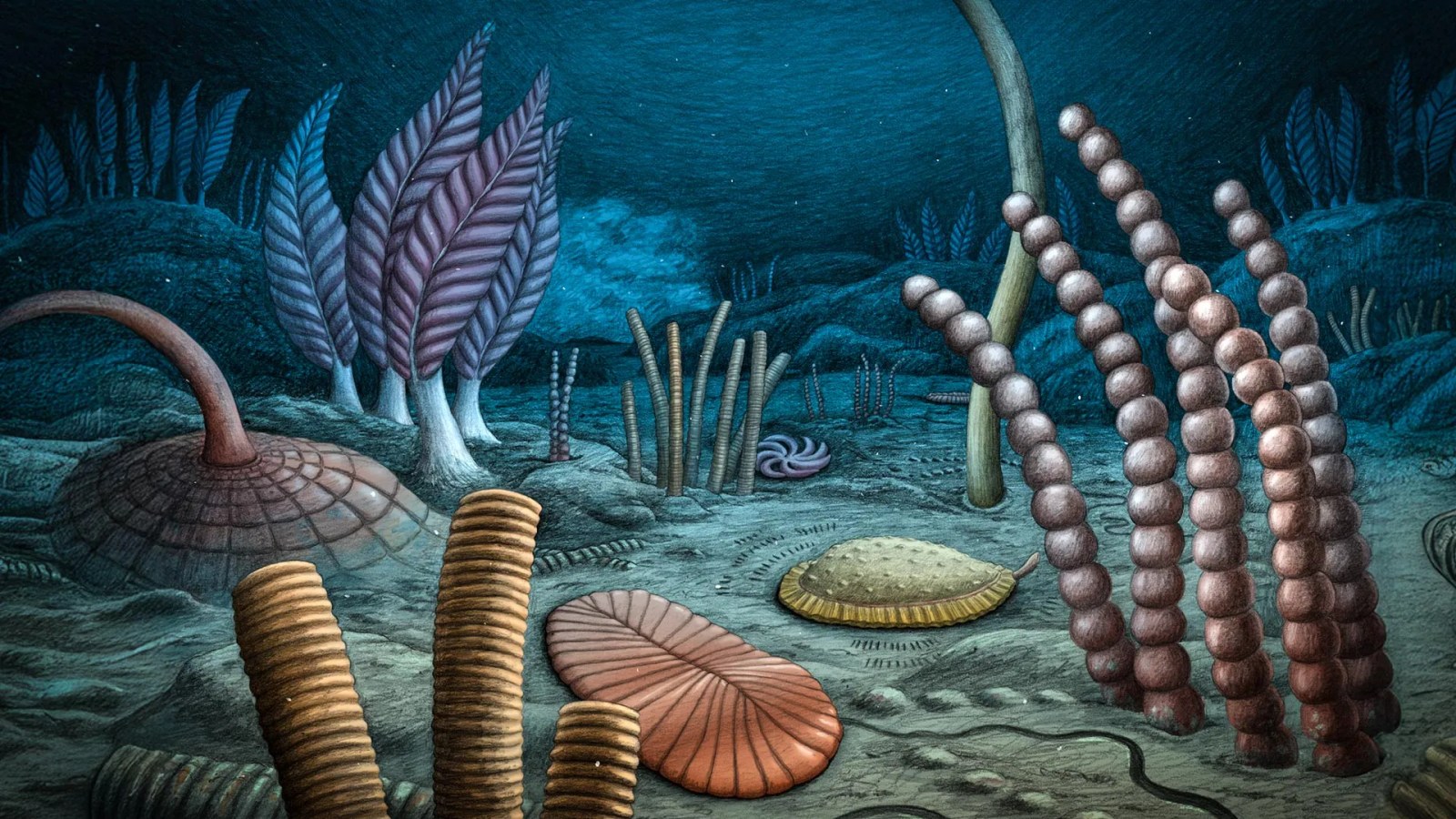
Researchers have uncovered an exceptionally rich fossil site in Canada’s Northwest Territories that is offering new clues about some of the earliest complex animals on Earth, according to ScienceDaily.
The fossils come from the Ediacaran biota, a group of mostly soft-bodied organisms that lived on ancient seafloors more than 500 million years ago. Some of the specimens are about 567 million years old, which the researchers say suggests animal movement and sexual reproduction may have begun 5 to 10 million years earlier than previously thought.
The study, led by scientists at the American Museum of Natural History and Dartmouth, was published in Science Advances. Researchers identified more than 100 fossils at the site, including six groups that had not previously been recorded in North America.
Among the fossils were Dickinsonia, a flat organism that moved across the seafloor; Funisia, a stationary tube-shaped organism that may preserve the oldest known evidence of sexual reproduction; Kimberella, an animal that scraped food from the seafloor and may be an early mollusk relative; and Eoandromeda, a possible comb jelly.
Scientists said the fossils also suggest these organisms lived in deeper water than had been associated with the White Sea assemblage before. That could support the idea that early animals first emerged in offshore, deep marine environments before later spreading into shallower waters.