
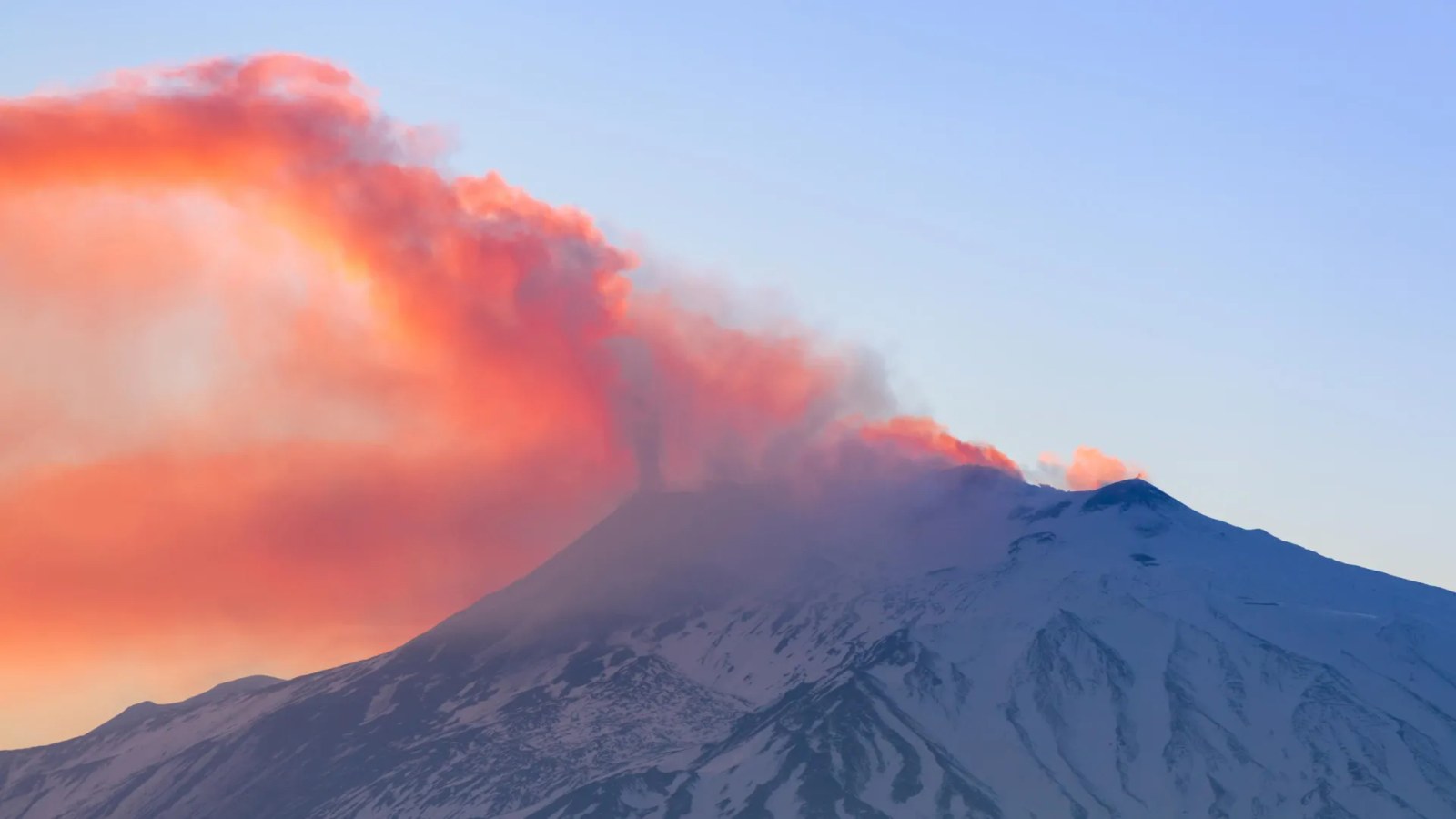
Mount Etna, Europe’s most active volcano, may have formed through a rare process not seen in other large volcanoes on Earth, according to a new study from the University of Lausanne published in the Journal of Geophysical Research -- Solid Earth.
The volcano on Sicily has puzzled scientists for years because its lava chemistry does not fit neatly into standard volcano formation models. Although Etna sits near a subduction zone, its lava looks more like that of hotspot volcanoes, even though no hotspot is known to exist beneath the area.
Researchers propose that Mount Etna is fed by small pockets of magma already stored in the upper mantle about 80 kilometers below the surface. They suggest the collision between the African and Eurasian plates slowly carries those pockets upward, while bending and fractures in the crust allow the magma to rise, according to the study.
The team says this could place Etna in a little-known fourth category of volcanoes called petit-spot volcanoes. Until now, that process had only been linked to small submarine volcanoes, not a large stratovolcano like Mount Etna, which has been active for about 500,000 years and rises more than 3,000 meters above sea level.
By analyzing rock samples from roughly half a million years of eruptions, the researchers found that Etna’s magma composition has stayed remarkably stable over time. They say the findings support the idea that the magma source already exists in the upper mantle and that tectonic movement controls how much reaches the surface.