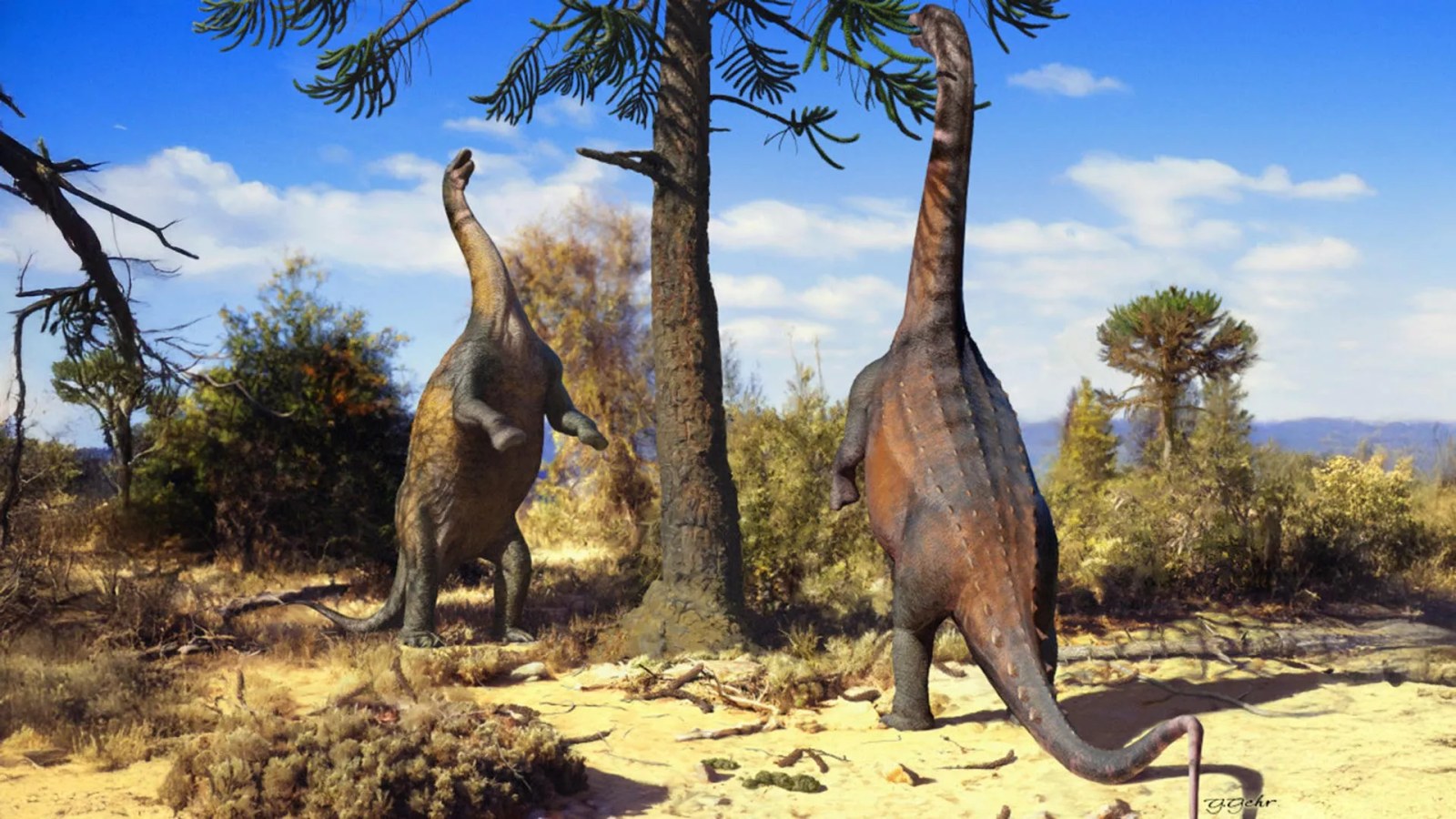
Some long-necked dinosaurs may have been more capable of standing upright than their size would suggest, according to ScienceDaily. A new study found that two South American sauropods could rise onto their hind legs and stay there for longer periods, especially when they were young.
The dinosaurs studied were Uberabatitan from Brazil and Neuquensaurus from Argentina. Both lived about 66 million years ago during the Late Cretaceous, and while they were smaller than the biggest sauropods, they were still about the size of modern elephants.
Researchers found that standing upright became more difficult as the animals grew. Younger dinosaurs were better able to support their weight on two legs, while adults likely faced much greater strain on their thigh bones because of their larger mass.
The study, supported by FAPESP and published in the journal Palaeontology, used digital bone reconstructions and finite element analysis to estimate stress on sauropod femurs. The findings suggest upright posture may have helped these dinosaurs reach high vegetation, display to mates, reproduce, or appear more threatening to predators.