
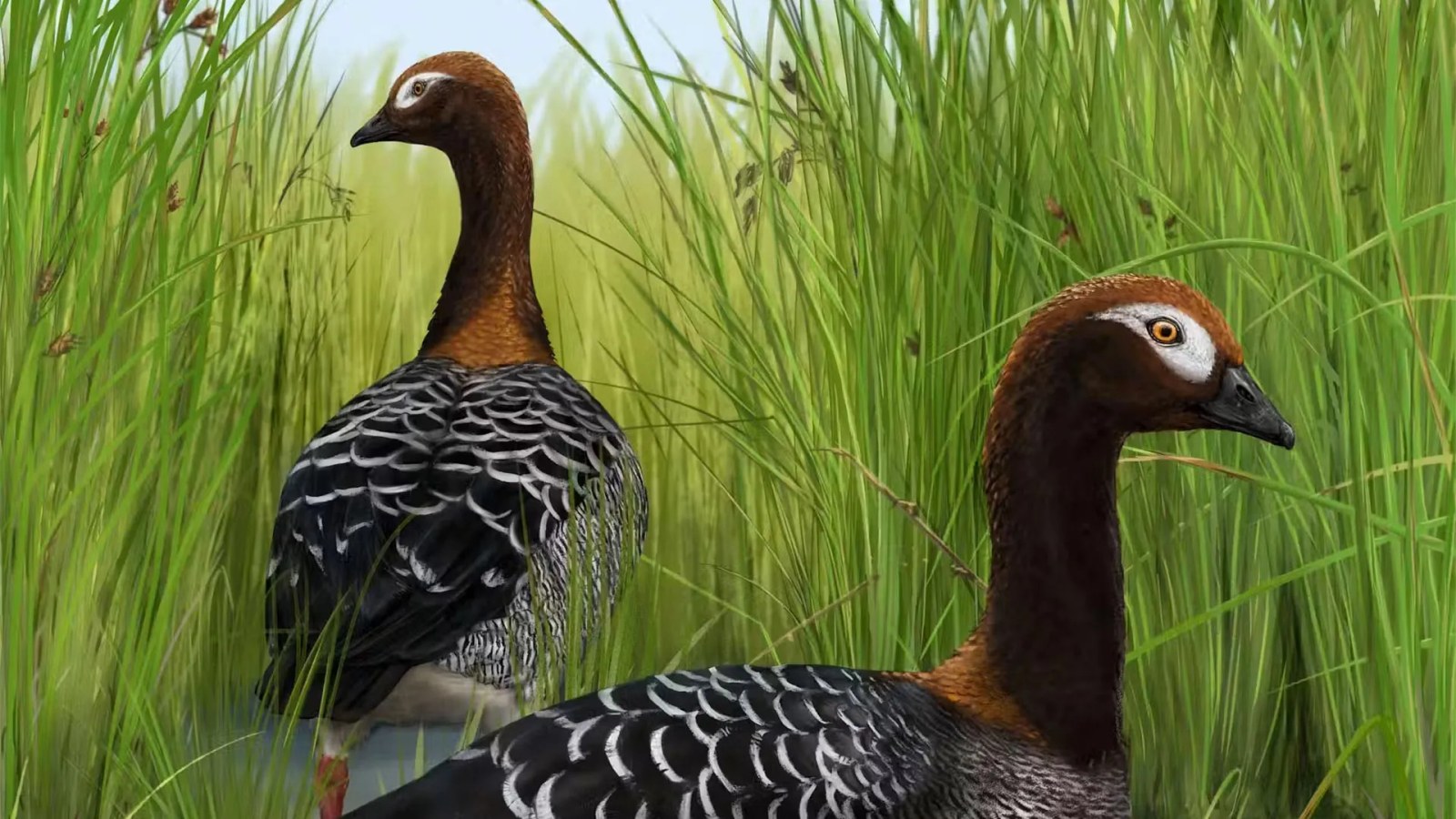
A rare fossil goose found in the remains of an ancient lake in Central Otago is reshaping scientists’ understanding of how New Zealand’s birds evolved, according to ScienceDaily and researchers from the University of Otago.
The study, published in Historical Biology, was done by an international team from the University of Otago, the Museum of New Zealand Te Papa Tongarewa, and the University of Cambridge. The fossil material came from the well-known St Bathans fossil deposits.
Associate Professor Nic Rawlence said geese are much rarer than other waterfowl at the site. After re-examining fossil bones previously identified as geese and comparing them with modern and extinct bird skeletons, the team found an undescribed species about the size of a small goose.
The bird has been named Meterchen luti. Researchers said the name refers to Old Mother Goose, with Meterchen meaning “mother goose” in ancient Greek and luti meaning “of the mud” in Latin. The study also found that the St Bathans goose was not closely related to the extinct giant flightless New Zealand geese, known as Cnemiornis, or to the Cape Barren goose in Australia.
Lead author Alan Tennyson of Te Papa said the findings, along with genetic evidence, support the idea that New Zealand’s bird history was more complicated than once thought. The researchers said the ancestors of the St Bathans goose arrived in Zealandia more than 14 million years ago, but that lineage died out without leaving descendants.