
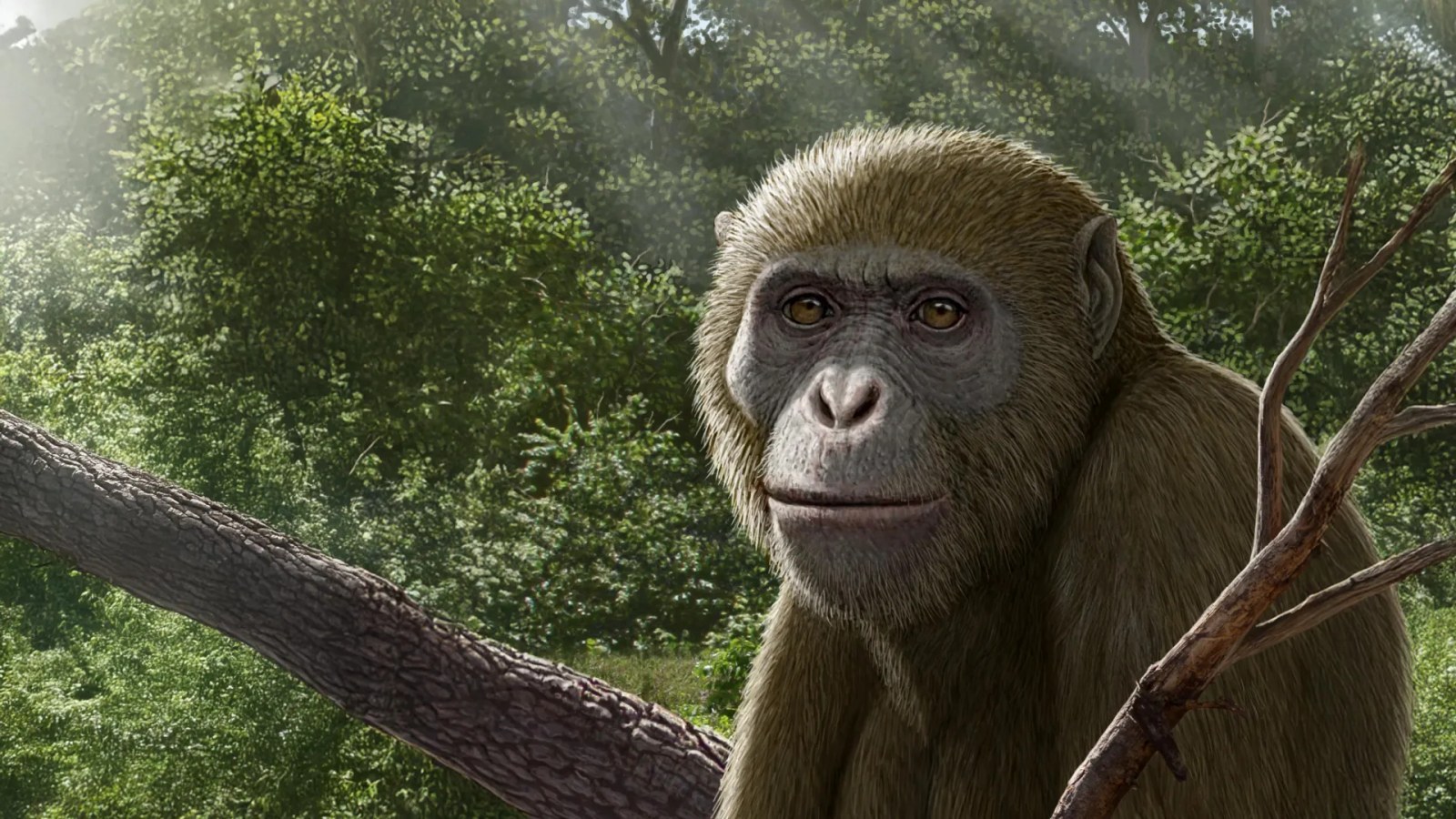
An international team of researchers has identified a previously unknown fossil ape that lived about 17 to 18 million years ago during the Early Miocene, according to ScienceDaily. The species has been named Masripithecus moghraensis.
The fossils were found at Wadi Moghra in northern Egypt and provide the first definitive evidence of an ape from North Africa. Researchers say the discovery expands the known range of early apes and suggests Egypt and the broader Middle East played a significant role in ape evolution.
According to the study, only part of a lower jaw has been recovered, but it includes a mix of traits not seen in any other ape from that time. The fossil features large canine and premolar teeth, rounded molars with textured chewing surfaces, and a strong jaw.
The researchers also believe Masripithecus likely had a flexible, mostly fruit-based diet, with the ability to eat harder foods such as nuts or seeds when needed. Using anatomical, DNA, and fossil-age evidence, the team concluded that Masripithecus was more closely related to living apes than any other Early Miocene ape found in East Africa.
Scientists involved in the study said the findings challenge long-held ideas about where the common ancestor of living apes may have lived. Their analyses point to northern Africa and the Middle East during the Early Miocene, and they say more fieldwork in the region could uncover additional fossils.