When summer temperatures soar into the triple digits, Maricopa firefighters still respond in full protective gear, whether the day is 80 degrees or 115 degrees. According to InMaricopa, Assistant Chief Chris Bolinger says handling the heat begins before a call ever comes in.
Bolinger, who has more than 25 years in fire service and two decades with Maricopa Fire/Medical Department, said crews work to prevent heat stress through planning and hydration. That includes drinking water on days off, scheduling outdoor training early in the morning and organizing much of the day around extreme summer conditions.
He told InMaricopa that the danger is both physical and mental. High heat can lead to slower thinking, weaker muscles, reduced fine motor skills and harder recovery, which is why firefighters cool down between work cycles and use rehab procedures after strenuous calls.
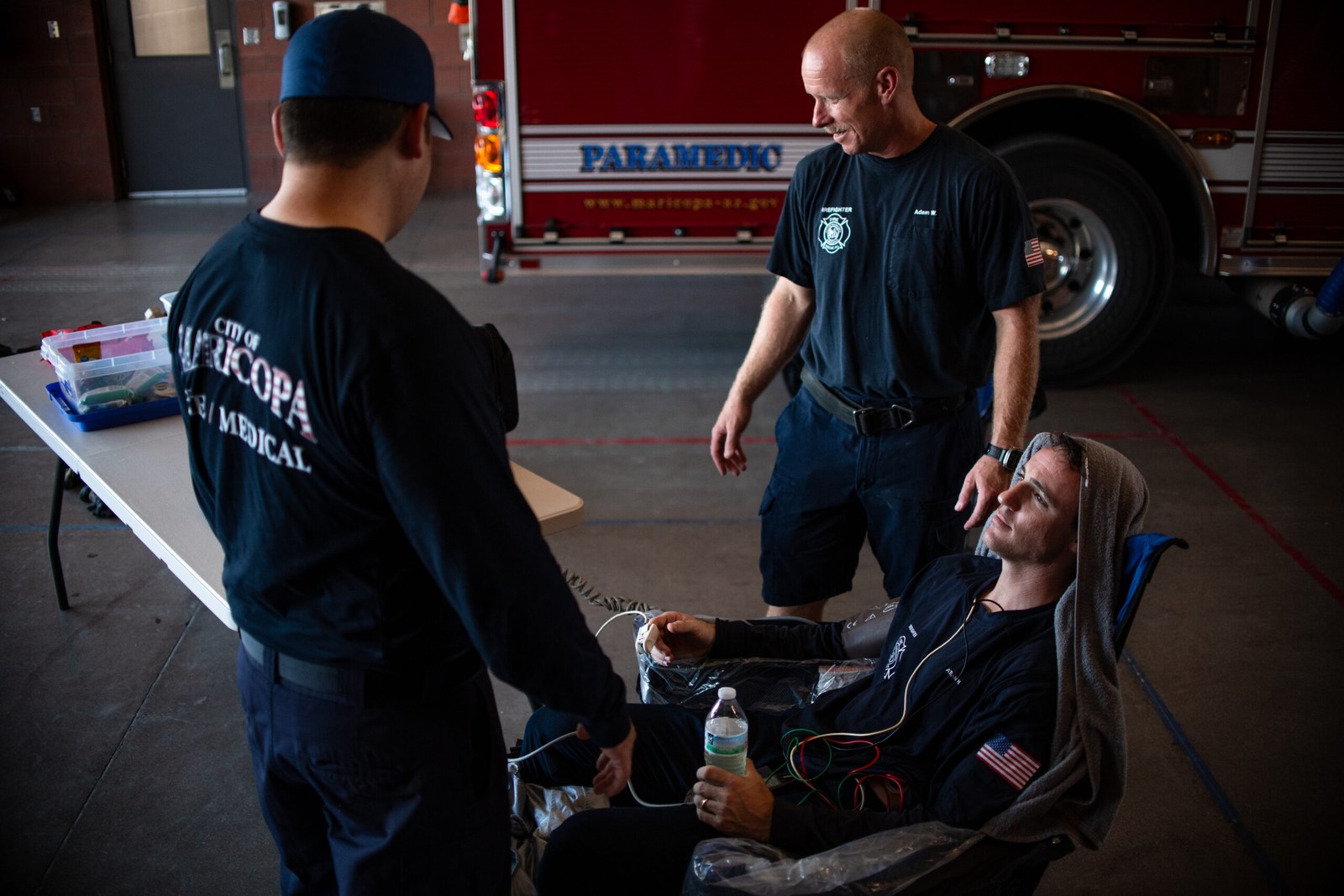
Bolinger said firefighter rehab helps crews recover enough to safely return to duty if needed again. After decontamination, firefighters remove their gear, expose larger muscle groups to air and place their forearms in ice water to help lower core temperature.
He also encouraged residents to adjust their routines during the hottest part of the day, save strenuous activity for early morning or evening and drink more water than they think they need. According to the story, warning signs of heat illness should not be ignored, especially if someone stops sweating or symptoms continue to worsen.