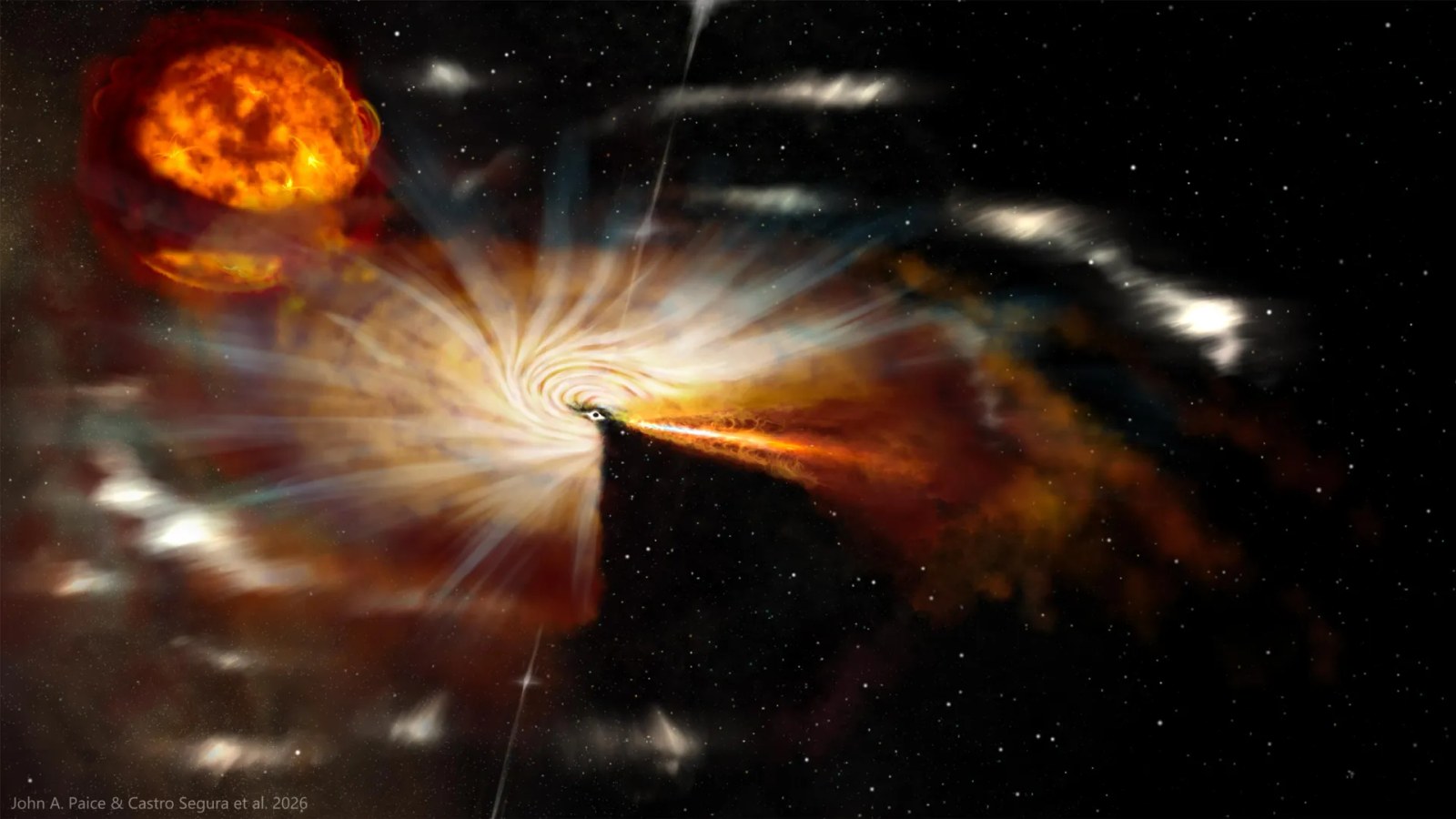
A University of Warwick-led team has found that black holes may expel nearly as much matter as they pull in, based on observations of a black hole system called Swift J1727.8−1613, according to ScienceDaily.
The researchers followed the system with the European Southern Observatory's Very Large Telescope during a bright eruption in 2023. As the black hole drew gas from a nearby star, it also launched powerful jets and winds that sent some of that material back out into space.
One of the biggest surprises came after the outburst had largely faded. Even when the system had dimmed to about one hundredth of its peak activity, the team still detected dense gas being blown away.
The study suggests black holes may not simply swallow everything around them. Instead, they may process incoming matter and return a substantial share of it to their surroundings, offering new insight into how these systems evolve, according to the University of Warwick researchers quoted by ScienceDaily.