
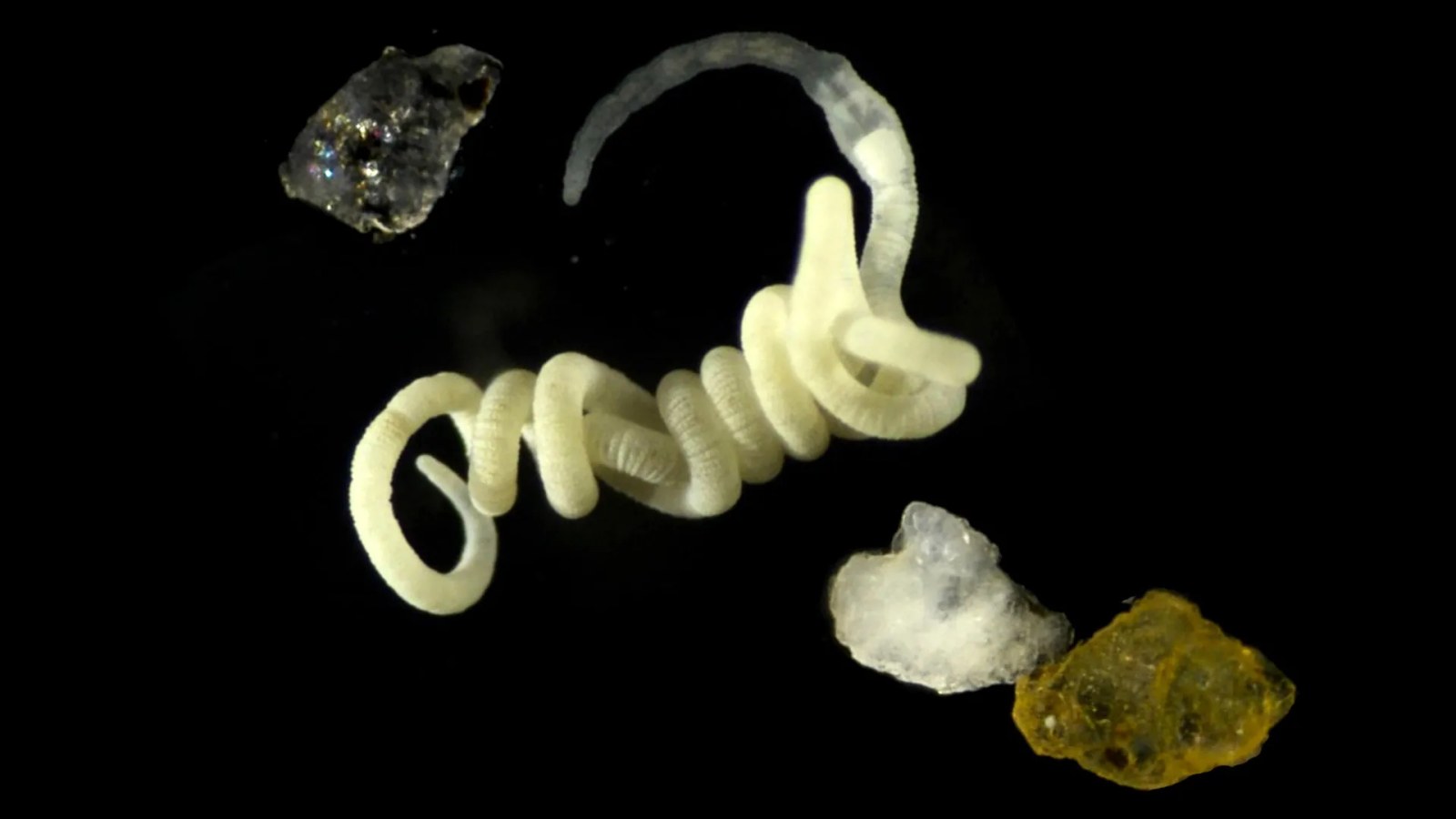
Scientists at the Max Planck Institute for Marine Microbiology in Germany have found that many animals can break down microbial polyhydroxyalkanoates, or PHAs, a natural plastic made by bacteria and archaea to store carbon and energy. The work, published in Nature Ecology & Evolution, challenges the long-held view that only microorganisms could degrade these compounds.
The research began with a marine worm, Olavius algarvensis, which has no mouth or gut and relies on symbiotic bacteria living beneath its skin. According to the researchers, they identified an enzyme in the worm that can break PHA into usable pieces, and imaging showed the enzyme is produced where the worm digests its bacterial partners.
From there, the team looked more broadly and found related enzymes in more than 66 animal species across nine phyla. Laboratory tests also showed that enzymes from distantly related animals such as a sponge, an earthworm and a springtail could degrade microbial PHAs.
The findings suggest that animals may help break down natural bioplastics in the environment and may also be able to tap into carbon reserves made by microbes. As co-corresponding author Maggie Sogin put it, animals may have been feeding on nature’s original bioplastic for hundreds of millions of years, even though scientists are only now uncovering the process.
The researchers say they still do not know how common this ability is in natural ecosystems or how much it affects global carbon cycling, but the discovery opens a new way to think about the relationship between microbes and animals.