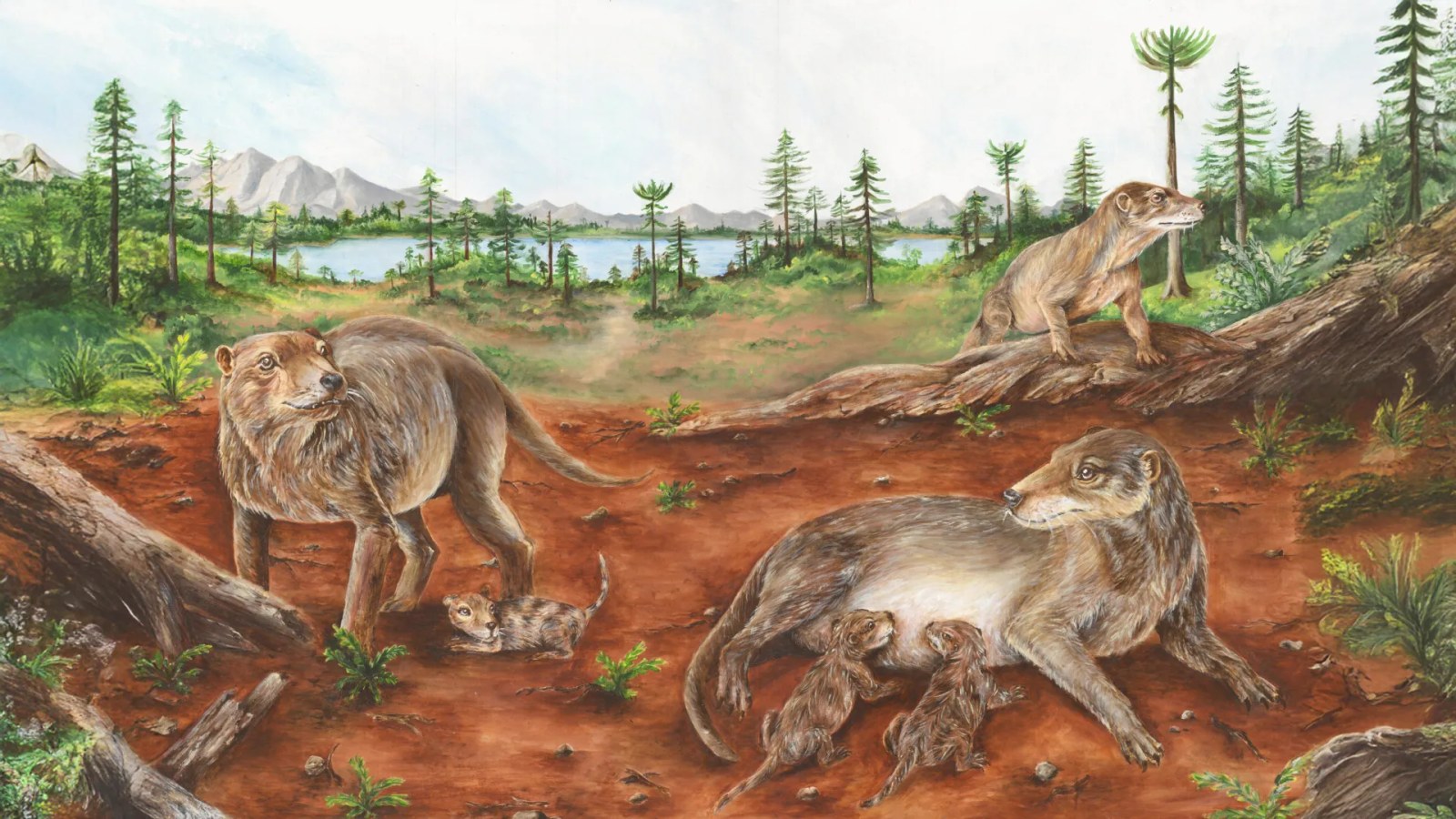
Some ancient cynodonts may have given birth to live young far earlier in evolutionary history than researchers once believed, according to a new study published in Frontiers in Mammal Science.
Scientists say the strongest evidence comes from Chiniquodon theotonicus, a mammal ancestor that lived about 236 million years ago. Lead author Dr. Leandro Gaetano of Argentina’s CONICET said the study offers the first compelling evidence that live birth was present in at least one mammalian ancestor, which would move the origin of viviparity in early cynodonts back by about 95 to 90 million years.
The research began when scientists noticed an unusual growth mark in a fossil of a fully grown C. theotonicus found in northwestern Argentina. After comparing the feature with living animals, they concluded it may have been a neonatal line, a mark that can form shortly after birth as growth speeds up.
Using bone measurements, the team estimated that the animal weighed about 1.7 kilograms at birth and around 12 kilograms when it died. They said that newborn-to-adult size ratio is much closer to living mammals than to reptiles or birds, which helped support the idea that the animal was born live.
The researchers say more evidence is needed before drawing broad conclusions, but they believe the fossil may show that some cynodonts were already showing traits similar to modern mammals long before true mammals appeared.