
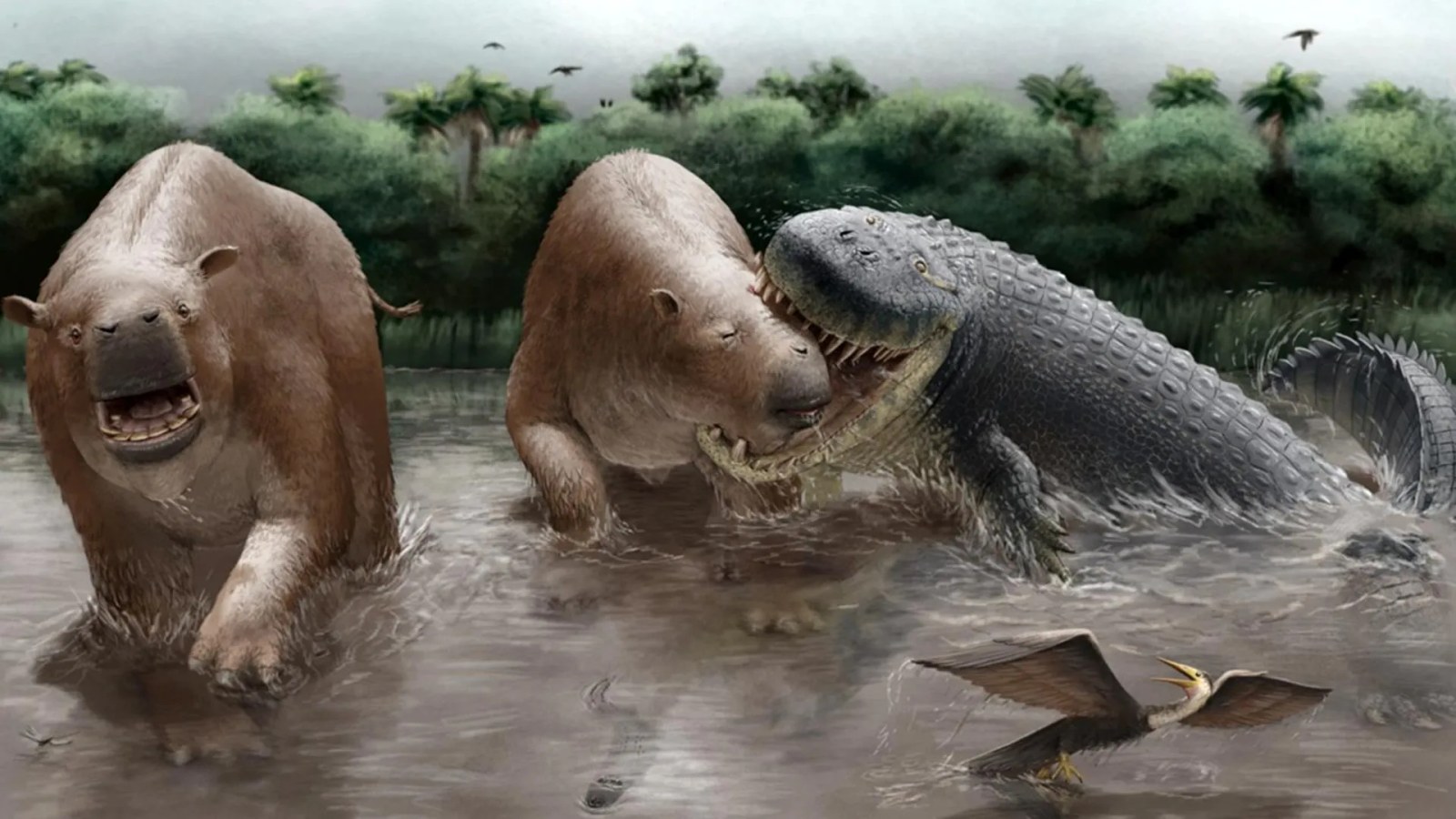
More than 10 million years ago, South America was home to a huge and crowded ecosystem filled with large prey and fearsome predators, according to ScienceDaily. During the Miocene, a vast lake covered much of the continent and supported giant turtles, crocodylians and a range of other animals.
Among the hunters living around the lake were anacondas, saber-toothed mammals, flightless terror birds and sebecids, which were land-dwelling relatives of crocodylians. But new research suggests crocodylians were the most important predators in the region, especially when it came to taking down large animals.
The largest known predator in the ecosystem was Purussaurus neivensis, a massive crocodylian related to modern caimans. According to the study, it reached about seven meters long and weighed roughly 1,800 kilograms.
Researchers examined fossils in museum collections for bite marks and tooth marks left on herbivore bones. Those traces, dating from about 10.5 million to 16 million years ago, provide direct evidence of predator-prey interactions and suggest Purussaurus was a major force in the tropical food web, the study found.
The study was published in the Journal of Vertebrate Paleontology. Researchers say the frequency of marks linked to Purussaurus indicates it may have influenced herbivore populations across the ecosystem, not just hunted individual prey.