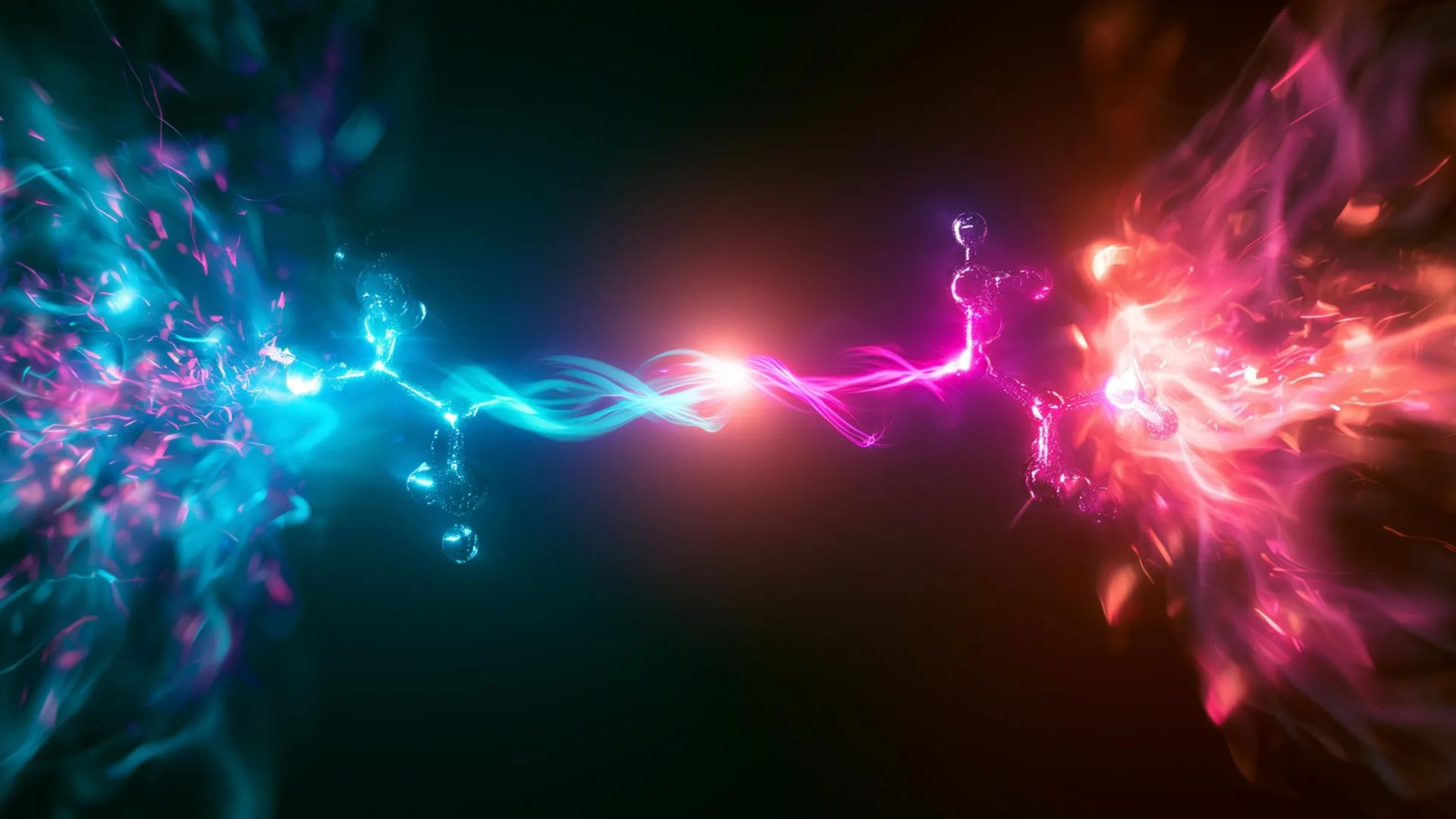
Scientists have demonstrated a new way to distinguish mirror-image molecules by using specially structured laser light, according to ScienceDaily. The approach targets chiral molecules, which can look nearly identical but behave very differently in biological and medical settings.
The research team, from Tata Institute of Fundamental Research, the Indian Institute of Technology Mumbai, and the Indian Institute of Technology Hyderabad, used light that both spins and twists as it moves. They tested ultrashort laser pulses on gas-phase samples of R- and S-camphor, a well-known chiral molecule, at the laser facility at TIFR Hyderabad.
When the laser pulses hit the molecules, they caused them to break into charged fragments. By measuring those fragments with a time-of-flight mass spectrometer, the researchers found that the number of fragments changed depending on how the light’s twist matched the molecule’s handedness.
According to the report, that difference was enough to tell the two mirror-image forms apart. The team says the method could reduce the need for more complicated detection setups used in some current chirality tests, while also producing stronger signals than traditional optical techniques.
The researchers say the approach may open new possibilities in chemistry, biology, and pharmaceutical science, where choosing the correct enantiomer can be important because mirror-image versions of a molecule can have very different effects.