
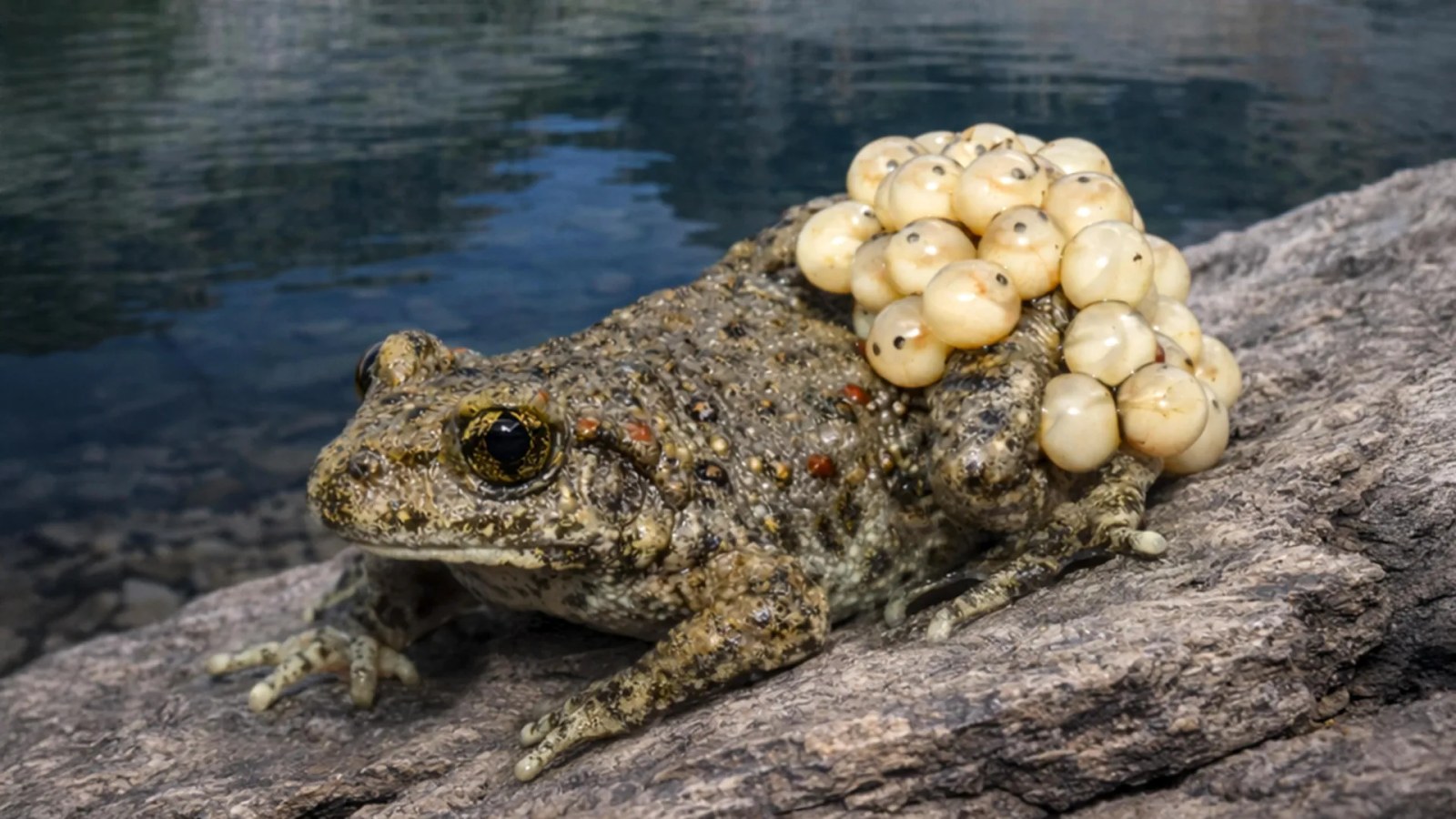
Scientists have identified one reason some amphibian populations are able to recover after being hit by a deadly fungal disease, according to ScienceDaily. The research was led by University College London, ZSL, and Imperial College London and published in Nature Chemical Biology.
The fungus, Batrachochytrium dendrobatidis, has driven severe declines in frogs and toads worldwide by causing chytridiomycosis, a disease that damages skin and disrupts the animals’ ability to regulate water, salts, and minerals. Tadpoles are largely protected early on, but once amphibians become adults and their skin changes, they become much more vulnerable.
To understand why some populations bounce back while others keep collapsing, researchers studied common midwife toads living near four lakes in the Pyrenees of France and Spain. One population was still shrinking, while the other three had recovered even though the fungus was still present in the environment.
The team found that toads in the recovering populations produced protective antimicrobial peptides much earlier, while they were still tadpoles. In the struggling population, those defenses developed later and were much weaker, leaving the animals less prepared once they became susceptible to infection.
Researchers also reported that the toads’ skin contained far more peptide diversity than expected, identifying 1,152 peptides in total, with only seven previously documented. According to the study authors, some of these molecules could eventually help scientists better understand immunity and may offer clues for future medical research.