
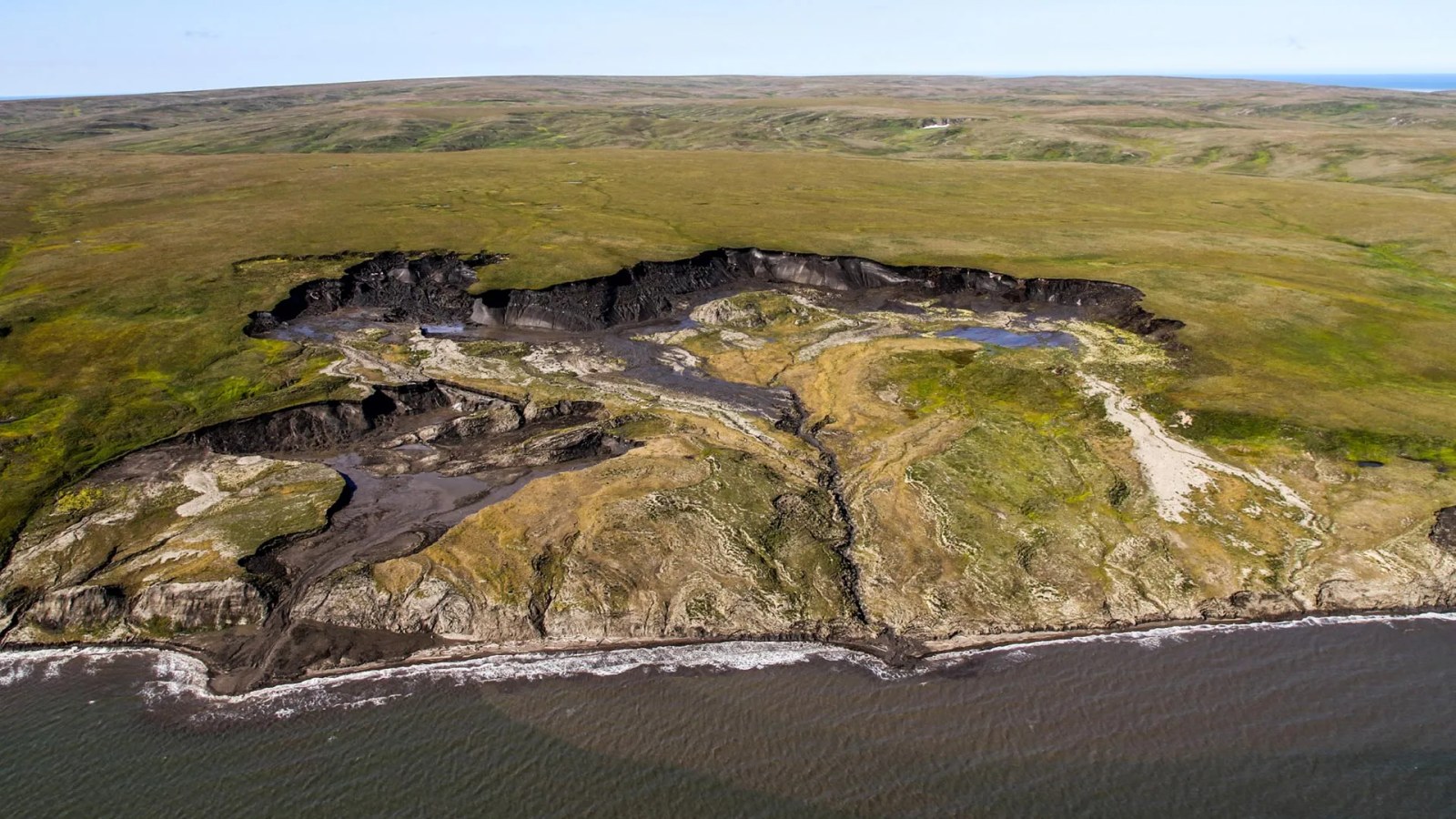
Frozen ground in the Arctic holds vast amounts of organic carbon, and warming temperatures are causing some of it to wash into the ocean as permafrost thaws and coastlines erode. According to ScienceDaily, scientists have long been trying to determine how much of that carbon returns to the atmosphere and how much stays buried.
Researchers from the Alfred Wegener Institute and the University of Bremen studied the permafrost coast near Qikiqtaruk, also known as Herschel Island, in Canada. By analyzing sediment cores from the area, they found that large amounts of land-based carbon are preserved on the seafloor.
The team also found that microorganisms in the sediments are selective about what they consume. The study suggests they prefer fresher carbon from marine sources over older carbon released from permafrost, and that only about 10% of the organic carbon in the sediments is converted into gases that can reach the atmosphere.
Dr. Manuel Ruben, the study’s lead author, said up to 0.02 gigatonnes of carbon are entering the sea each year, and that amount could rise significantly by 2100. The researchers said the findings help clarify how thawing permafrost may influence climate models, though they noted more research is still needed.
The study was published in Nature Geoscience. The researchers also said the movement of carbon into coastal waters can affect water clarity and the food web that supports algae, fish, crustaceans and seals.