
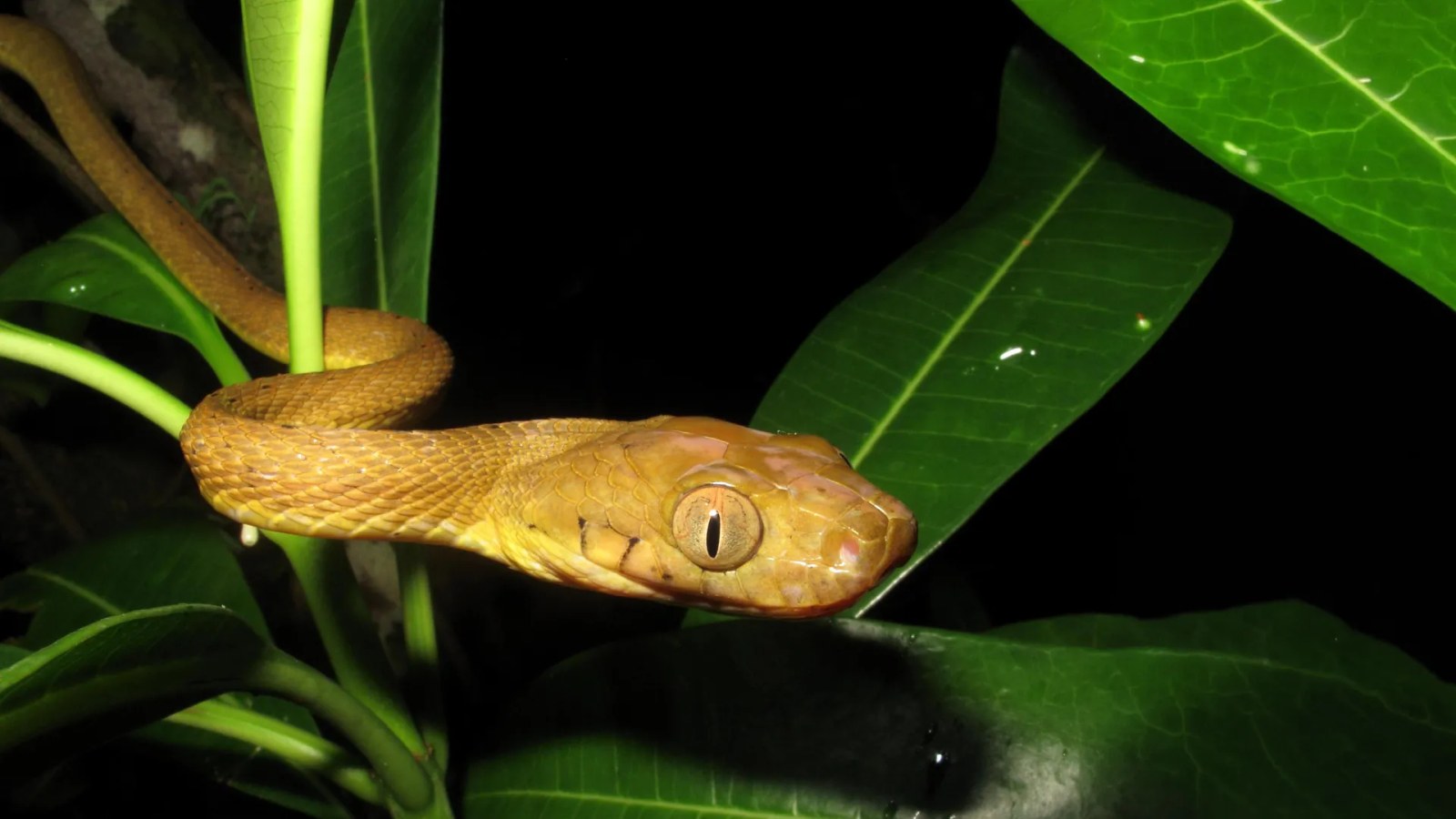
A University at Buffalo-led study published July 24 in Science Advances suggests brown tree snakes on Guam carry far more genetic diversity than scientists previously recognized, according to ScienceDaily.
The snakes, native to Australia and the South Pacific, likely reached Guam after World War II and have since caused major ecological damage, including the loss of many native forest birds and frequent power outages. In some parts of the U.S. territory, their population has been estimated at as many as 30,000 snakes per square mile.
Researchers used long-read sequencing to examine large sections of the snake genome and identified more than 19,000 structural variants. These changes included duplicated, deleted, or rearranged DNA segments, with many concentrated in genes tied to immunity and smell.
According to the study, that hidden genetic diversity may help explain how the invasive population got established from only a small number of snakes and then adapted so successfully on Guam. The findings may also provide insight into how some endangered species with small or inbred populations can still respond to their environments.
The researchers said they still do not know whether these genetic differences existed before the snakes reached Guam or developed after the invasion began. More comparisons with snakes from the species' native range would be needed to answer that question.