
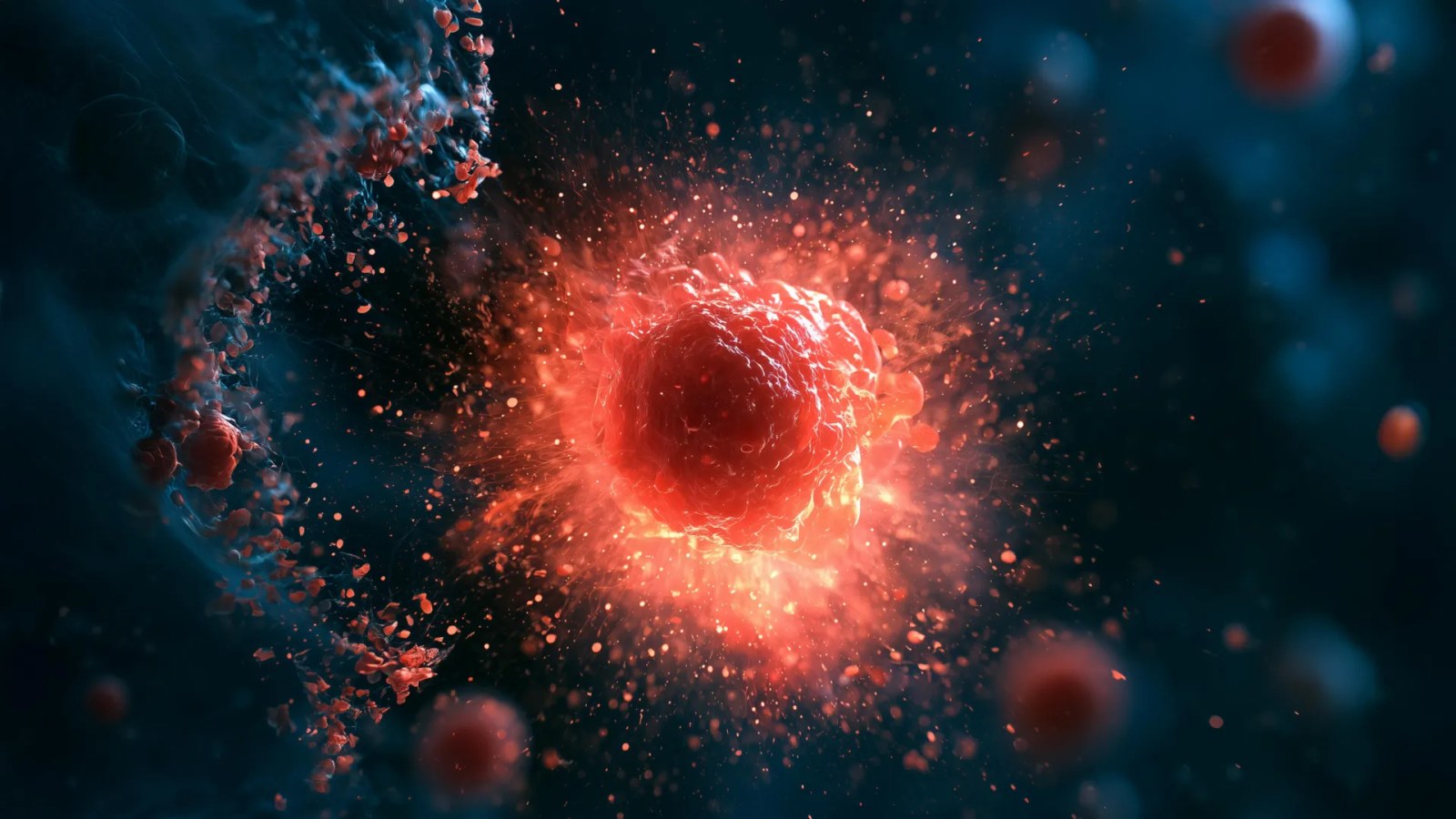
Stanford researchers say they have found a previously unknown immune cell in planarian flatworms that kills nearby cells by exploding. According to ScienceDaily, the cell disappears within minutes and leaves almost no trace behind.
The team named the cells “ruptoblasts” and the explosive process “ruptosis” after observing the reaction while studying how flatworms recognize their own tissue versus tissue from another worm. The research was published in Cell.
To test the worms, researchers fused pieces from different individuals together and found that the flatworms rejected foreign tissue with a strong inflammatory response. They also saw activin, a hormone linked to flatworm regeneration, rise before the response intensified.
Using live-cell imaging and flow cytometry, the scientists watched a small group of cells burst open, release substances that killed nearby cells, and vanish in under five minutes. The ruptoblasts were able to kill E. coli bacteria, human kidney cells and mouse blood cells in tests, but the effect stayed limited to cells close to the explosion.
The researchers said similar cells were only found in basal bilaterians such as flatworms, suggesting the defense may have emerged early in animal evolution. They believe the discovery could help guide future research into infection or tumor treatments, according to the study.