
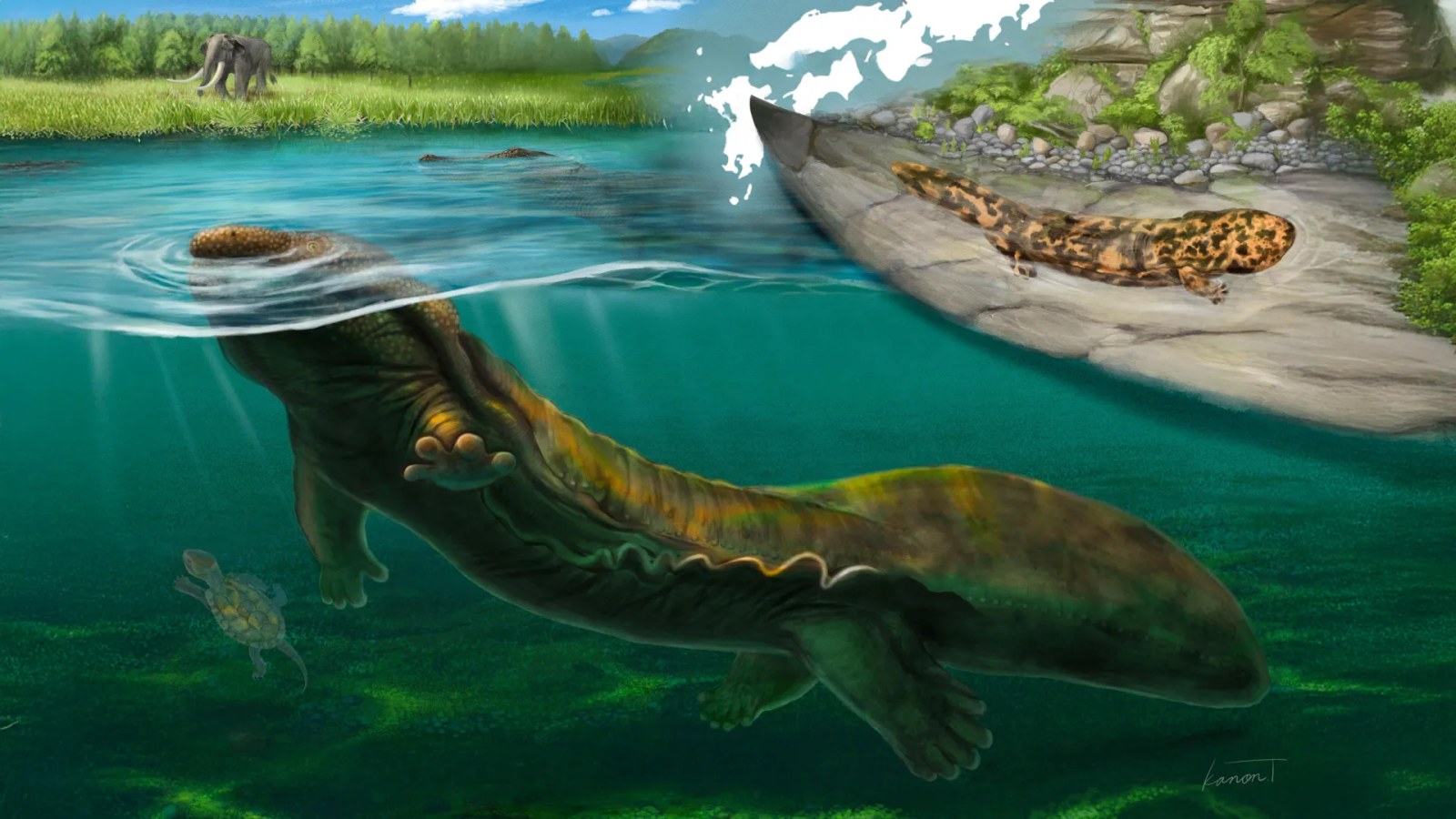
Scientists have identified a new giant salamander species from fossils found in the Ajimu area of Oita prefecture, Japan, according to ScienceDaily. The remains were uncovered in the late 1990s and date to about 3.5 million years ago.
The fossils consisted of three vertebrae preserved in the Tsubusugawa Formation, an ancient lake deposit from the Pliocene. Other fossils from the same formation include elephants and crocodiles, suggesting the region was once much warmer and more humid than it is today.
At first, the bones were assigned to the genus Andrias, which includes the largest amphibians living today. But researchers did not have enough comparative material at the time to determine exactly which giant salamander they represented.
More than 20 years later, a Kyoto University team revisited the fossils and compared them with skeletons of living Cryptobranchidae species. The analysis showed the bones included three different vertebrae, and one of them had anatomical features not seen in any other known member of the family.
Based on those differences, the researchers concluded the fossils belonged to a previously unknown species and a new genus, which they named Limnospondylus ajimuensis. The team said the species may have grown to about 1.1 meters long and likely lived in freshwater lakes and marshes that once covered parts of Kyushu.