
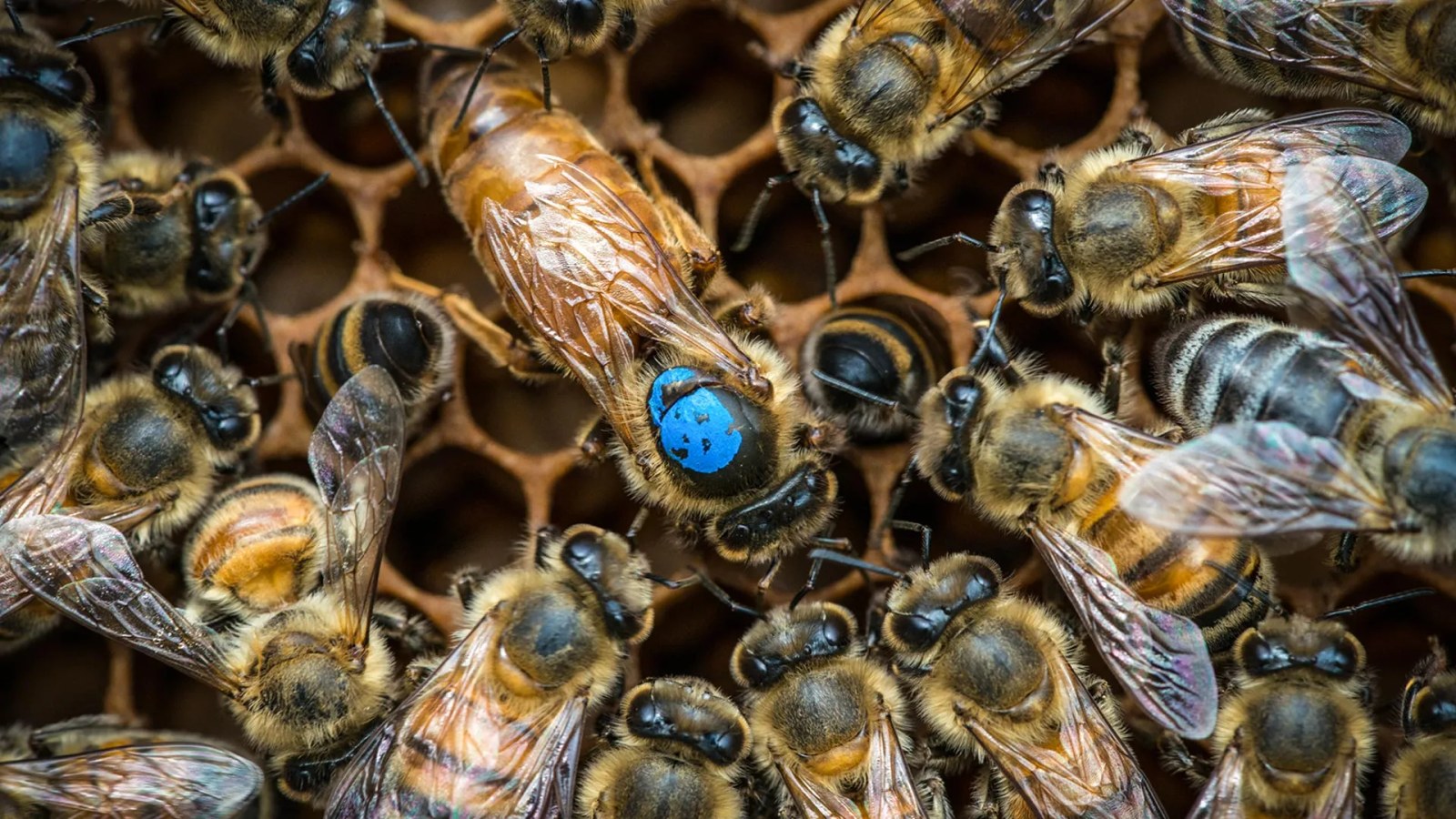
Scientists have identified brain circuits that help determine which jobs worker bees do inside a colony, according to ScienceDaily. The findings could help explain how bees organize their workforce without a central leader assigning tasks.
Researchers from Heinrich Heine University Düsseldorf and the universities in Cologne and Frankfurt/Main found that changing a particular gene and reducing activity in certain neural circuits altered bee behavior. When those circuits were affected, older worker bees went back to caring for the queen, a task usually done by younger bees.
The study builds on earlier work involving the doublesex gene, which had already been linked to age-related changes in worker bee behavior. In the new research, scientists used the gene to produce a protein that suppresses neural activity and then activated it by feeding bees a specific substance, allowing them to target only certain circuits.
According to lead author Dr. Jana Seiler, the bees resumed their younger-stage duties when those circuits were inhibited, while bees with normal circuit activity kept their usual age-dependent roles. The team says the findings suggest that communication between neural circuits helps determine whether a bee nurses the queen, maintains the hive or later searches for food.