
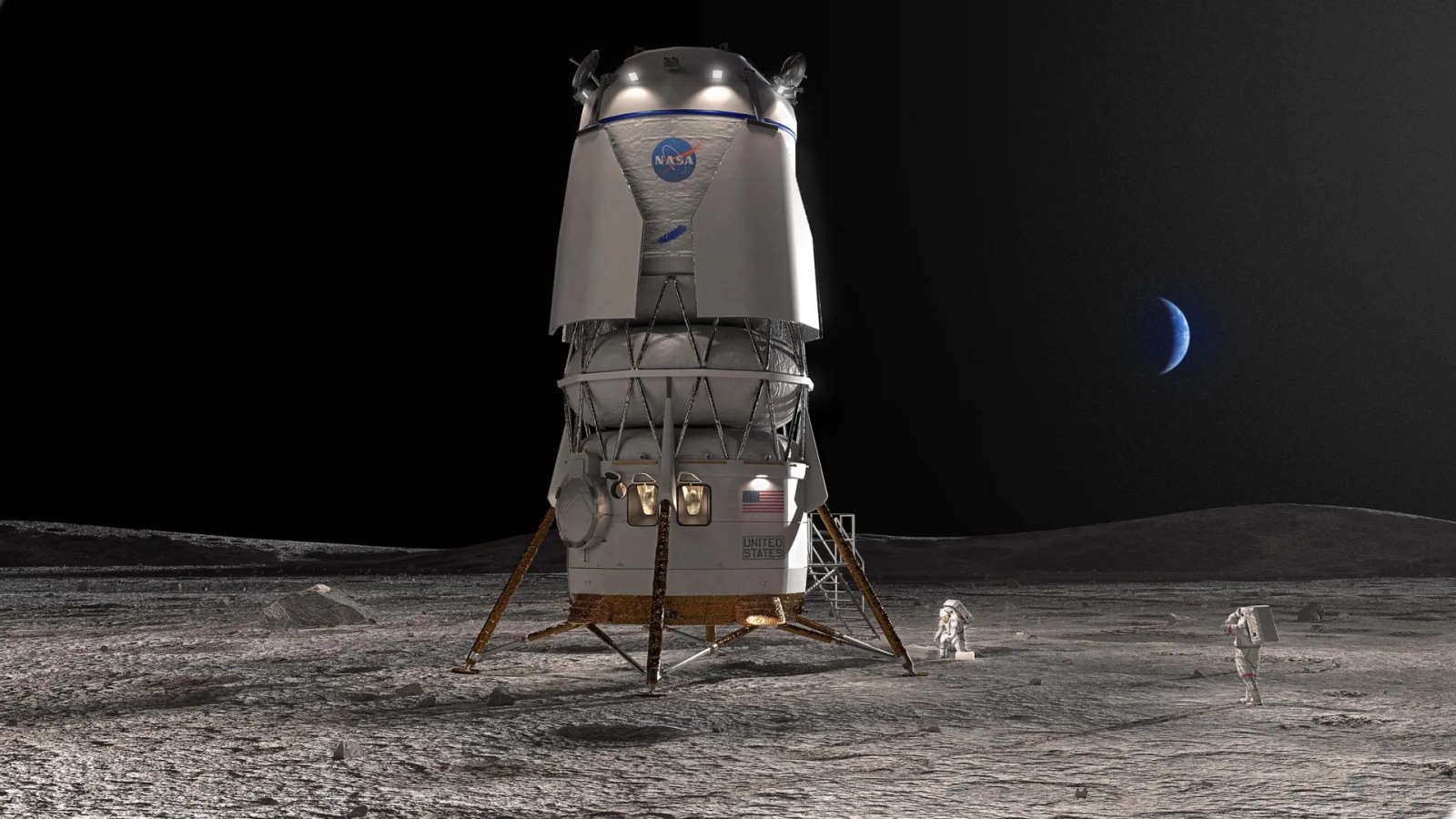
As lunar missions accelerate, scientists are warning that landings on the Moon may leave behind more than tracks in the dust. According to ScienceDaily, a new study found that methane from spacecraft exhaust could spread across the lunar surface far more quickly than expected.
The research suggests that even a landing near the Moon’s South Pole could send methane molecules hopping to the North Pole in less than two lunar days. The study was published in the Journal of Geophysical Research: Planets, an AGU journal focused on planetary science.
Silvio Sinibaldi, the European Space Agency’s planetary protection officer and a senior author of the study, said the Moon offers a rare record of the solar system’s early history. But he noted that human activity could also get in the way of scientific discovery by contaminating areas researchers want to study.
The concern is greatest in permanently shadowed craters near the poles, where extremely cold conditions may have preserved ice and organic molecules delivered by comets and asteroids billions of years ago. Scientists believe those materials could include prebiotic organic compounds that may help explain how life first began on Earth.
Using ESA’s planned Argonaut mission as a case study, the researchers modeled how methane released during landing would move across the Moon. Their simulations showed that more than half of the methane could become trapped in cold polar regions within seven lunar days, with 42% collecting at the South Pole and 12% at the North Pole.