
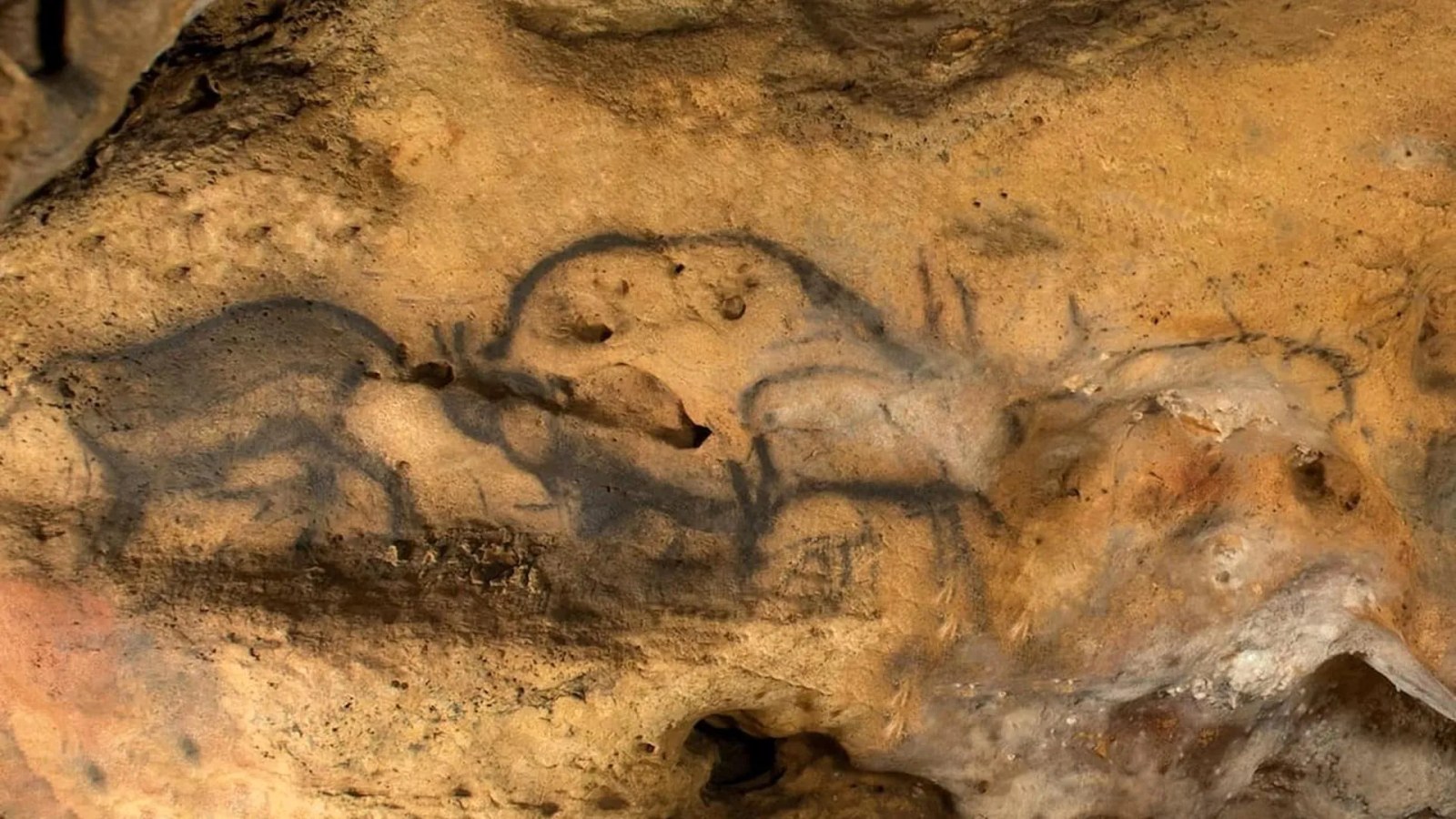
Scientists have, for the first time, accurately dated prehistoric paintings inside Font-de-Gaume, a decorated cave near Les Eyzies in Dordogne, southwestern France, according to ScienceDaily.
The research focused on two black images, a bison and a mask-like figure. Using Raman microspectrometry and hyperspectral imaging, the team found traces of charcoal in the black pigment, showing that the carbon was part of the original artwork rather than later contamination.
After receiving special permission to remove tiny samples, the researchers used radiocarbon dating to establish an age for the bison and to examine different parts of the mask. The bison was dated to the Upper Paleolithic, while the mask produced three different date ranges, suggesting it may have been made or altered in separate episodes thousands of years apart.
According to the study, published in PNAS, the method could help scientists date other prehistoric figures that were once thought impossible to analyze directly. The findings may also help archaeologists better understand when people entered decorated caves and whether later generations returned to modify the art.