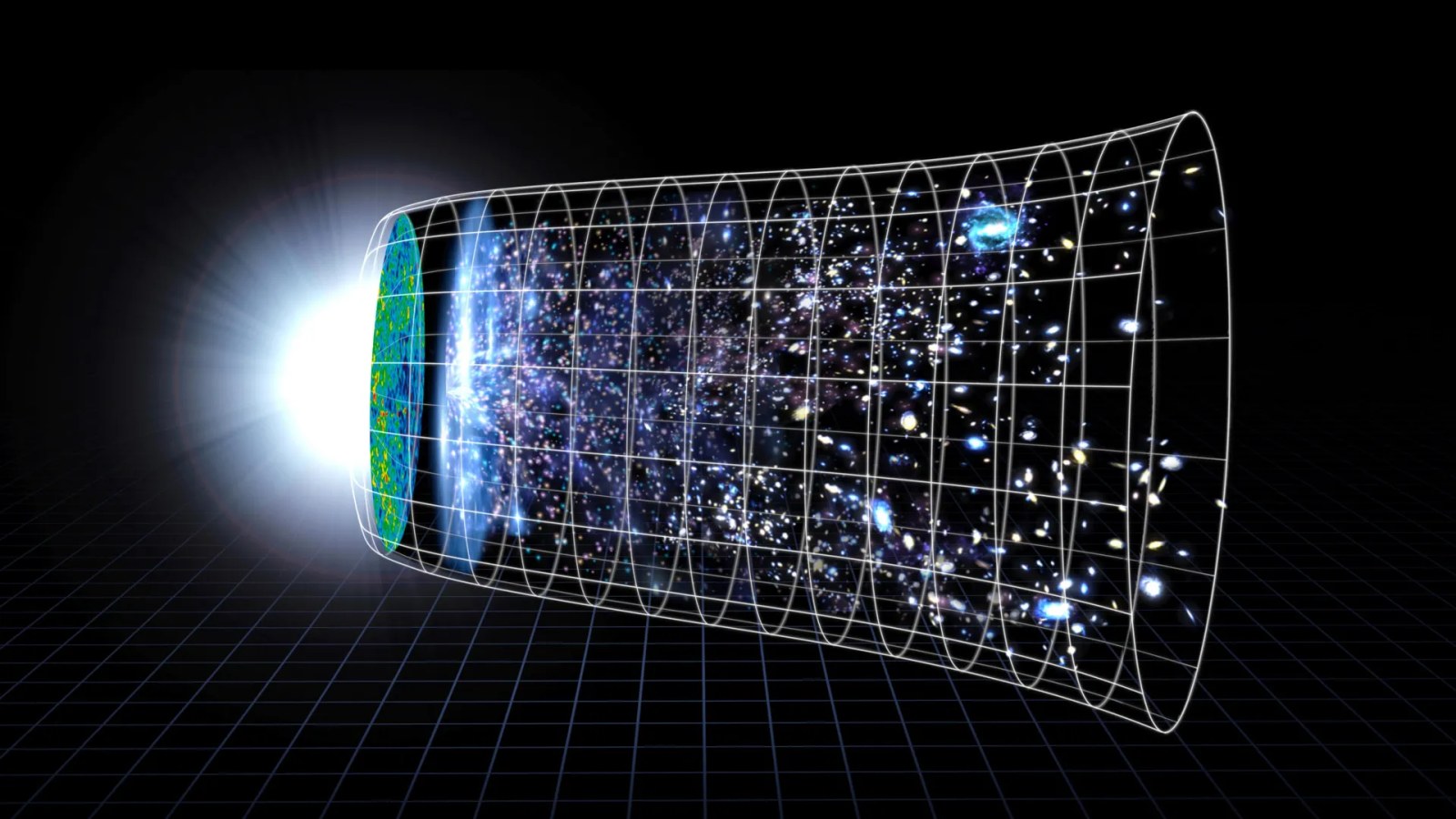
According to ScienceDaily, the expanding universe makes cosmic distances harder to measure because space changes while light is traveling across it. That means the light astronomers see from a distant galaxy shows where it was when the light left, not where it is today.
To estimate a galaxy’s current distance, scientists use cosmological models such as LCDM, which accounts for dark matter and dark energy. The article says alternative models do not significantly change the overall picture described.
The universe is about 13.77 billion years old, but the farthest regions we can observe are now roughly 45 billion light-years away. That boundary is known as the particle horizon, or cosmological horizon, and it marks the edge of what we can see today.
ScienceDaily explains that this does not contradict physics because the speed of light limits motion through space locally, not the stretching of space itself. Astronomers measure recession through redshift, and the point where galaxies begin receding faster than light is called the Hubble distance, about 13.77 billion light-years away.
The article also notes a more distant limit called the cosmological event horizon, currently about 17 billion light-years away. Light emitted now from beyond that boundary will never reach us, and in the far future, observers may only be able to see galaxies within the Local Group as the rest fade from view.