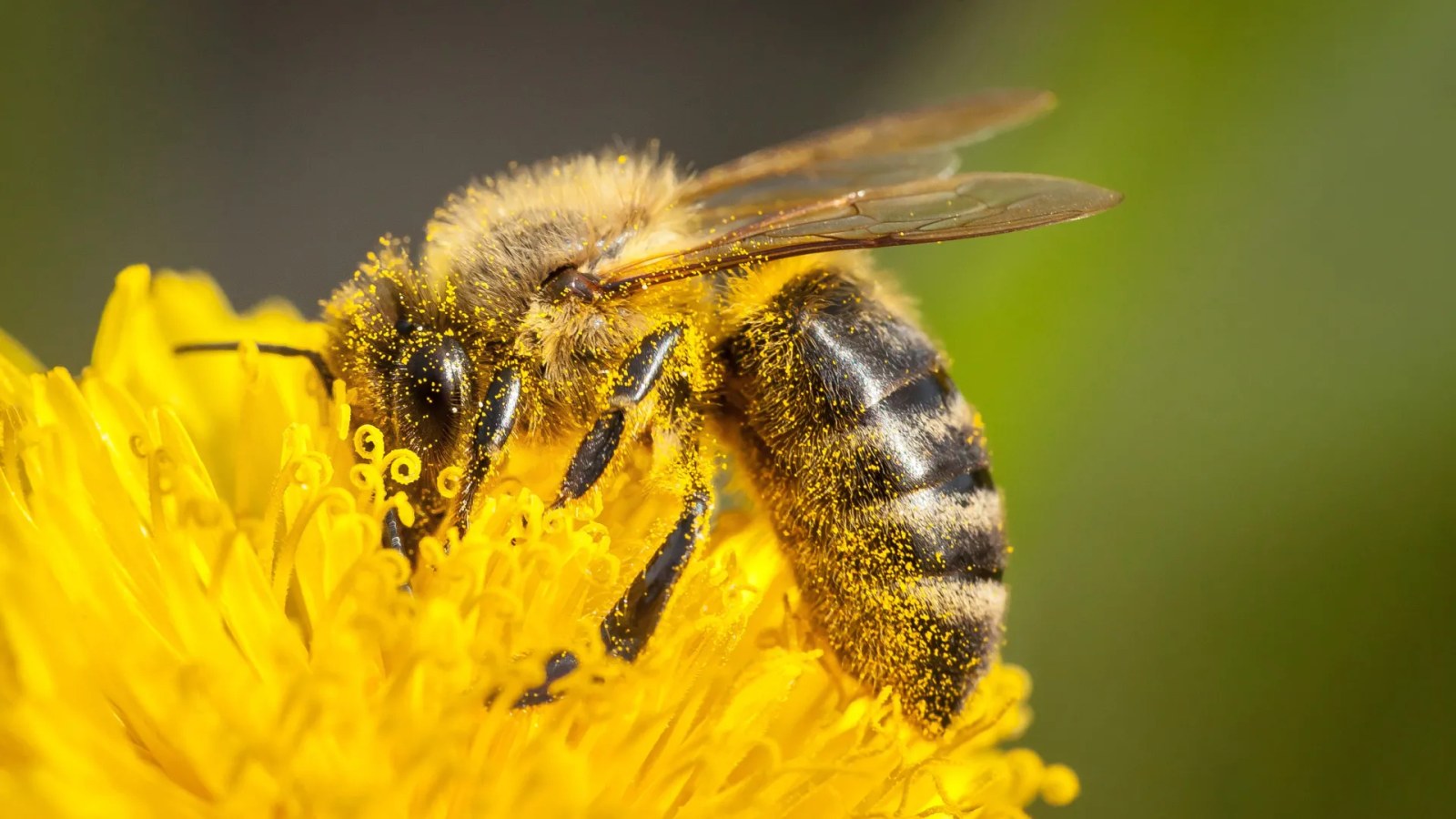
New research led by the University of Oxford has found that honeybees can adjust how much they eat depending on the balance of essential amino acids in their food, according to ScienceDaily.
The study, published in Current Biology, examined pollen from 99 flowering plant species in the U.K. and found that many samples did not closely match the amino acid needs of honeybee tissues. Researchers then fed newly emerged worker bees artificial diets designed to mimic different pollen and tissue compositions.
Bees given food that more closely resembled their own tissue makeup ate more, gained more body mass and chose diets with more protein. But when the ratio of histidine was relatively high, the bees cut back on total food intake and consumed less protein and carbohydrate.
The team says this may be a form of post-digestive feedback that helps bees avoid taking in too much of certain amino acids. The findings also suggest that bee bread and royal jelly provide a more balanced amino acid profile for colonies, and that planting schemes for pollinators may need to focus on a wider diversity of pollen sources, not just the number of flowers available.