
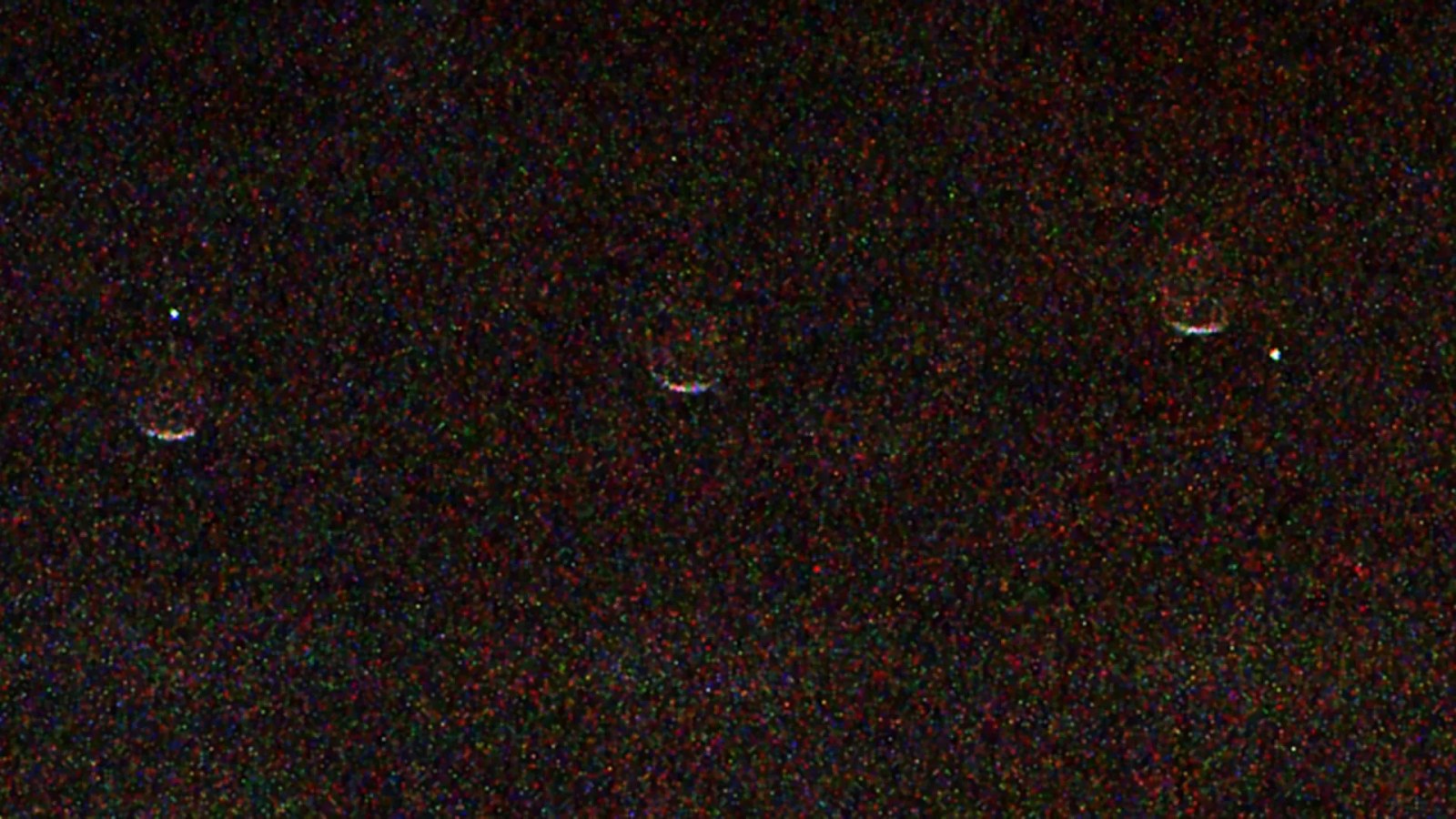
NASA’s Perseverance rover has captured an unusual view from the surface of Mars, showing Earth briefly passing behind Phobos in the Martian evening sky, according to ScienceDaily.
The image sequence was taken with the rover’s Mastcam-Z instrument at about 7 p.m. local solar time on July 2, which was the 1,907th sol of the mission. In the composite, Earth and Phobos move in opposite directions until they line up, and Earth disappears behind the moon’s dark edge.
Justin Maki, Mastcam-Z deputy principal investigator and imaging scientist for Perseverance at NASA’s Jet Propulsion Laboratory, described the result as a unique Earth self-portrait from another planet, with what he called a “Phobos photobomb.”
From Perseverance’s location near the rim of Jezero Crater, the contrast between the two objects is striking. Phobos is about 17 miles across at its widest point and orbits only 4,850 miles from Mars, while Earth was roughly 195 million miles away and appeared as just a single point of light.
Mark Lemmon, a Mastcam-Z co-investigator at the Space Science Institute, said the event was difficult to catch because it takes both planning and luck. Scientists say the observation is an occultation, which is different from an eclipse or a transit.