
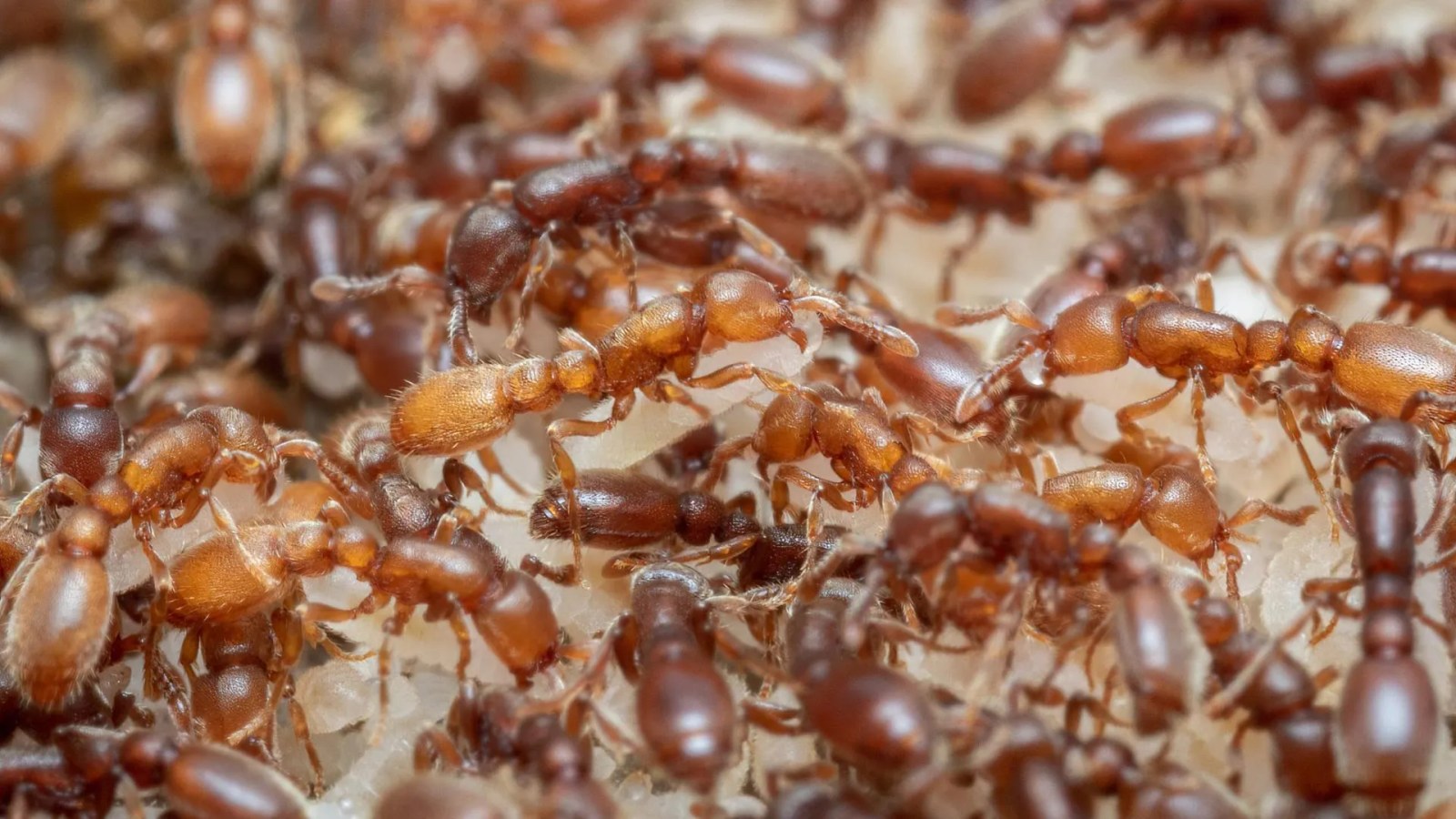
A study published in Nature suggests that caregiving may have evolved by reusing ancient brain circuits that once controlled hunger and feeding, according to ScienceDaily. Researchers reached that conclusion by studying clonal raider ants, whose social behavior changes as they age.
The team found that two neuropeptides played opposite roles in the ants' behavior. Neuropeptide F, or NPF, encouraged ants to care for larvae, while Allatostatin A, or AstA, made them more likely to leave the nest and search for food.
According to the researchers, younger ants naturally had higher NPF levels and lower AstA levels in key parts of the brain, while older ants showed the reverse pattern. When the scientists changed the activity of either molecule, the ants shifted between caregiving and foraging.
The study also showed that these signals responded to hunger. Starved ants showed a chemical pattern linked to caregiving, while fed ants became less focused on tending larvae and more likely to forage. Researchers say the findings support the idea that parental care evolved from brain systems already involved in feeding.
Daniel Kronauer of Rockefeller said the work shows evolution often repurposes what already exists rather than building from scratch. The researchers now plan to map the specific neural circuits involved, and they say the results may offer clues about parenting pathways shared across animals, including mammals.