
Scientists say an enormous ancient cliff system may help explain why some of the Grand Canyon’s oldest rocks are exposed today, long before the Colorado River began carving the landscape we see now, according to ScienceDaily.
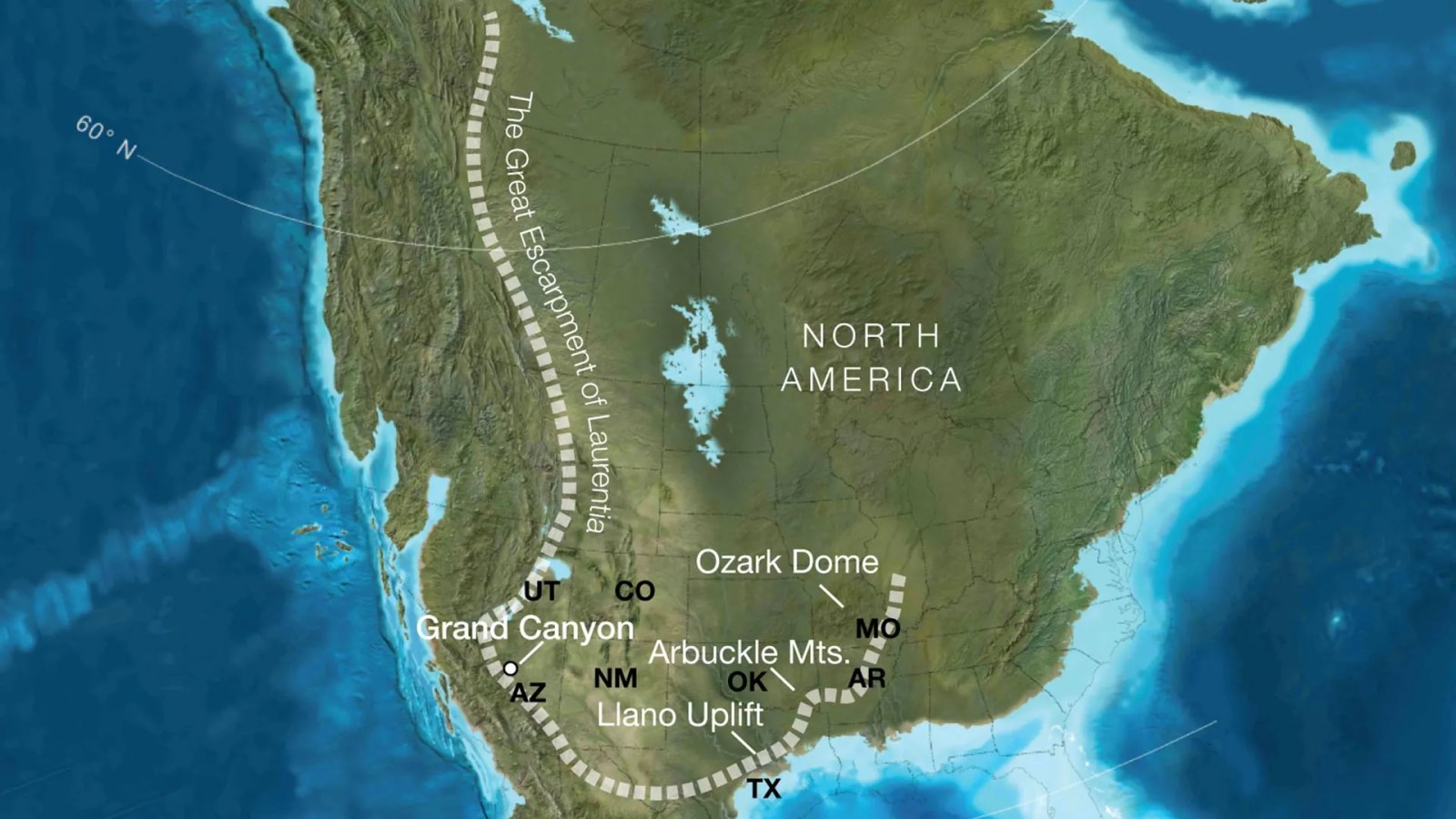
The study, led by researchers at the University of Southampton, proposes that a vast “great escarpment” formed about 800 million years ago as the supercontinent Rodinia broke apart. The cliffs may have been about a kilometer high and stretched for thousands of kilometers across western North America.
Over millions of years, erosion along that boundary may have removed huge amounts of rock and gradually revealed ancient crystalline basement rocks in the Grand Canyon in southern Arizona. Lead author Thomas Gernon said the canyon preserves nearly two billion years of geology, but more than half of that record appears to be missing.
Published in Geology, the research combines plate tectonic reconstructions with landscape evolution data. The team says the escarpment may have extended across areas that now include Arizona, Utah, Idaho, Wyoming, Colorado, Texas, Oklahoma, Arkansas, Missouri and Illinois, and could have removed as much as eight kilometers of rock in some places.
The researchers also say the ancient landscape may help explain the Great Unconformity, the vast gap in the rock record that spans more than a billion years, and could offer clues about how continents changed over hundreds of millions of years.